
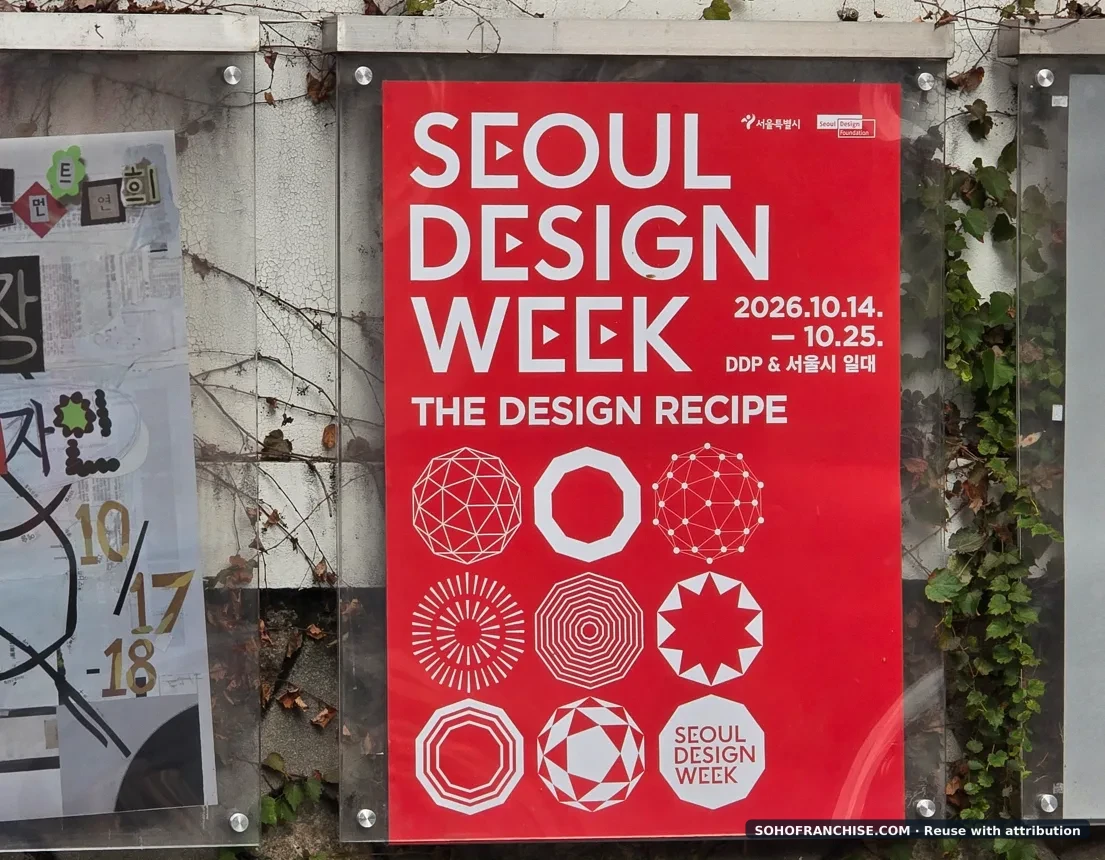
SEOUL, South Korea — October 16, 2026
Seoul Design Week 2026 opened on October 14 under the theme “The Design Recipe,” bringing attention to the role of design in shaping contemporary urban life. Scheduled through October 25, the event centers on Dongdaemun Design Plaza (DDP) and locations across Seoul.
But the broader significance of Seoul Design Week extends beyond exhibitions and organized programs. Across the city, design is increasingly visible in independent retail spaces, neighborhood cafés, architectural renovations and everyday consumer experiences.
Together, these spaces offer a perspective on how creativity influences Seoul's identity and its evolving urban economy.
The Design Recipe: Creativity Beyond the Exhibition Hall
This year's theme, “The Design Recipe,” provides an invitation to consider design as a combination of ideas, materials, experiences and human interaction.
Design is no longer limited to the appearance of a product or building. It increasingly shapes how people move through cities, engage with businesses and experience public and private spaces.
In Seoul, these changes are particularly visible in neighborhoods where traditional buildings coexist with contemporary architecture and small businesses experiment with distinctive visual identities.
The city itself becomes part of the design experience.
Independent Spaces as Urban Design Laboratories
A walk through Seoul's smaller commercial streets reveals another dimension of its creative economy.
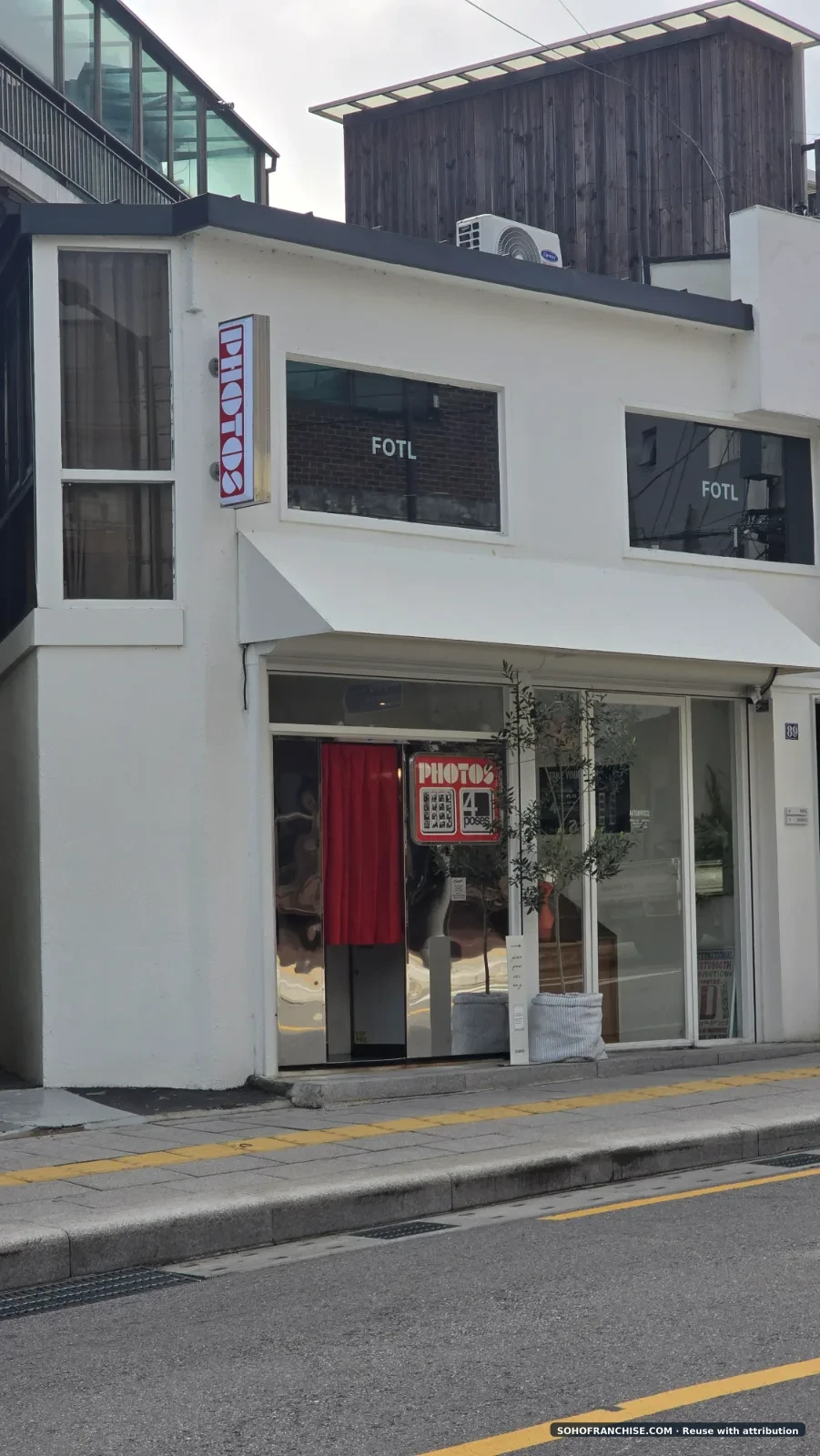
Independent photo studios, fashion boutiques, specialty cafés and lifestyle shops often occupy compact buildings rather than large commercial complexes.
Their appeal depends not only on the products or services they offer but also on architecture, signage, lighting, materials and the atmosphere surrounding the customer.
A modest storefront can become a recognizable visual landmark through a distinctive sign, a carefully designed entrance or an unconventional use of an existing building.
These small-scale businesses demonstrate how design can create differentiation without requiring the investment associated with large commercial developments.
They also illustrate an important economic principle: creative identity can become a competitive advantage for independent businesses.
Seoul's Neighborhoods: Where Old and New Coexist

One of Seoul's distinctive characteristics is the close relationship between older residential neighborhoods and contemporary commercial spaces.
Traditional rooflines, narrow streets, brick buildings and modern interiors frequently appear within the same urban landscape.
Rather than replacing every older structure, some businesses adapt existing buildings to accommodate new uses.
This approach can preserve elements of neighborhood identity while supporting contemporary retail, hospitality and cultural activities.
The result is an urban environment where architectural contrast becomes part of the experience.
For visitors, these neighborhoods offer an alternative to standardized shopping centers. For designers and entrepreneurs, they provide opportunities to create new experiences within established urban settings.
The Experience Economy: Design in Everyday Moments
Design also influences experiences that may initially appear unrelated to the creative industries.
A café overlooking Seoul's residential rooftops, for example, offers more than food or beverages. Its seating arrangement, window placement, interior atmosphere and relationship with the surrounding neighborhood all contribute to the experience.
Even an ordinary dessert can become part of a carefully composed visual and social environment.
This reflects a broader shift toward experience-oriented consumption, where customers increasingly evaluate businesses through atmosphere, authenticity and emotional connection as well as price and product quality.
For small businesses, design can therefore serve as a practical tool for building customer recognition and encouraging repeat visits.
From Urban Culture to Creative Industry
Seoul Design Week also offers an opportunity to examine the economic significance of design.
The creative economy connects multiple sectors, including architecture, fashion, digital media, consumer products, hospitality and urban development.
Design can support these industries in several ways:
Product differentiation: Helping businesses distinguish their offerings in competitive markets.
Brand identity: Creating recognizable visual and experiential characteristics.
Urban regeneration: Supporting new commercial and cultural uses for existing buildings.
Customer experience: Connecting physical environments with consumer expectations.
Creative entrepreneurship: Allowing small businesses to compete through originality rather than scale alone.
However, design-led urban development also presents challenges.
As distinctive neighborhoods attract more visitors and commercial investment, rising rents and changing property uses can place pressure on the independent businesses that helped establish their character.
Maintaining a balance between commercial growth, neighborhood identity and long-term accessibility remains an important consideration.
DATAAD View: Design as Part of Urban Competitiveness
Seoul Design Week 2026 highlights a broader transformation in how cities create economic and cultural value.
Infrastructure, technology and capital investment remain essential to urban development. Yet a city's attractiveness also depends on how people experience its streets, businesses, public spaces and everyday environments.
Seoul's combination of contemporary design, independent entrepreneurship and established neighborhood architecture offers an example of how these elements can interact.
The significance of design is not limited to a finished product or a landmark building. It can be found in the relationship between a small storefront and its street, between a café and its surrounding rooftops, or between a city's history and its emerging creative businesses.
The larger lesson from Seoul Design Week is that design is not simply something a city displays. It is something a city lives.
DATAAD Field Observation | Seoul, October 2026
Photography: JB Kim / DATAAD.com