
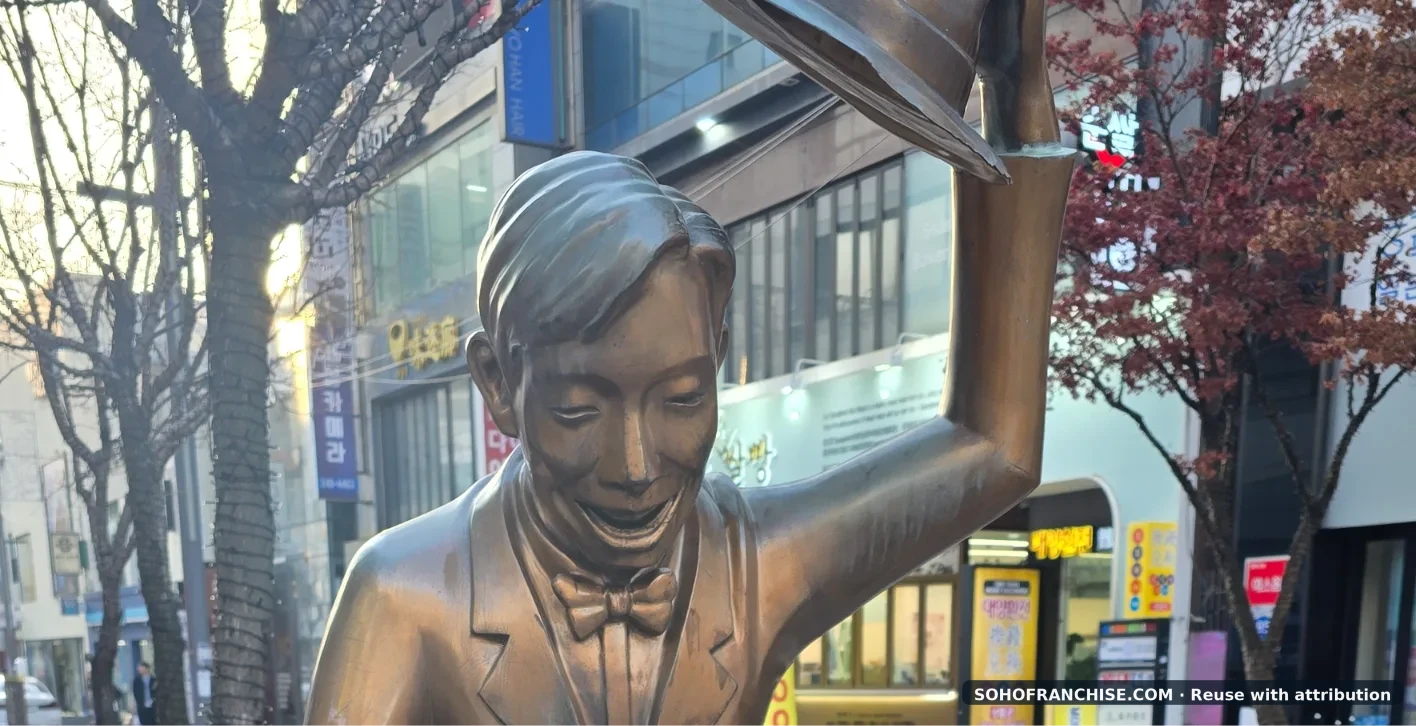
Discover the Shopping Heart of Old Busan
Busan is famous for its beaches, seafood and modern waterfront skyline. But in the streets of Nampo-dong, visitors can discover another side of South Korea's second-largest city: a historic commercial district shaped by trade, migration, survival and entrepreneurship.
At its centre stands Gukje Market (국제시장), one of Busan's best-known traditional markets.
Unlike a modern department store, Gukje Market is a collection of busy shopping lanes, independent shops, market buildings and food stalls. Visitors can discover everything from clothes, shoes and handbags to kitchenware, accessories, household products and traditional snacks.
The surrounding neighbourhood connects naturally to Bupyeong Kkangtong Market, BIFF Square, Gwangbok-ro shopping street and Yongdusan Park.
Together, these attractions offer an enjoyable introduction to Busan's historic downtown.
From Refugee Trading Stalls to a Famous Market
The story of Gukje Market begins in the years following Korea's liberation from Japanese colonial rule in 1945.
Traders began selling surplus goods, imported merchandise and everyday necessities in the area.
When the Korean War began in 1950, Busan became a temporary capital and refuge for large numbers of people displaced by the conflict.
Many refugees had lost their homes, property and livelihoods. Small trading stalls became an important way to earn money and support their families.
Imported goods, second-hand products, clothing and household necessities were traded throughout the district.
Over time, these informal commercial activities helped establish one of Korea's largest and most recognisable traditional markets.
The name Gukje means "international", reflecting the market's long association with overseas goods and trade.
Today, Gukje Market remains a living reminder of Korea's postwar economic recovery and the determination of small merchants.
Gukje Market and the Movie Ode to My Father
Gukje Market gained renewed international attention through the 2014 Korean film Ode to My Father (국제시장).
The movie follows the life of an ordinary Korean man whose experiences span the Korean War and several decades of the country's modern history.
Part of the story is closely associated with Busan's international market and the struggles of a family making a living in postwar Korea.
For visitors familiar with the film, exploring Gukje Market provides a more personal connection to the historical experiences portrayed on screen.
The market's significance is therefore not limited to shopping. It also represents memories of migration, family responsibility and economic survival.
What to Buy at Gukje Market
Fashion, Clothing and Shoes
Fashion is one of the market's most accessible shopping categories.
Visitors can browse casual clothing, jackets, shoes, bags, socks, hats and seasonal accessories in a wide range of independent stores.
Many shops offer practical everyday products, while some specialise in discounted or vintage merchandise.
Vintage Fashion and Second-Hand Finds
The wider Nampo-dong district is known for vintage clothing alleys where shoppers can search for second-hand garments and unusual fashion items.
Rather than expecting the carefully arranged displays of a department store, visitors should approach vintage shopping as an opportunity to explore, compare and discover unexpected finds.
Household Goods and Kitchenware
Gukje Market also serves everyday shoppers looking for cooking utensils, storage products, household accessories and practical goods.
These shops provide a glimpse into the market's continuing role as a traditional commercial centre for local residents.
Bags, Accessories and Souvenirs
Handbags, fabric bags, travel accessories, small gifts and decorative merchandise are widely available in parts of the market.
Not every item is made in Korea, so travellers looking for locally manufactured products should check labels or ask sellers about their origin.
Modern Shopping Around Nampo-dong
The historic market sits beside a more contemporary retail environment.
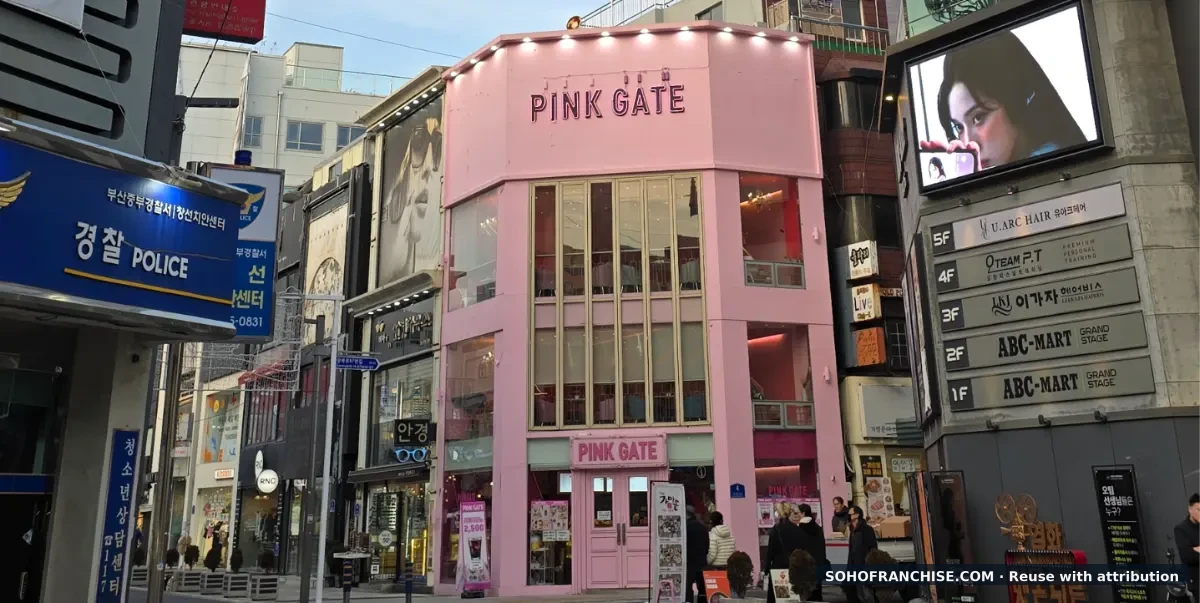
On streets around Gukje Market, visitors will encounter fashion chains, shoe retailers, cosmetics stores, cafés and brightly decorated independent shops.
A distinctive pink storefront, colourful signs and large outdoor advertisements reveal how modern commercial design now exists alongside traditional market businesses.
This mix is part of Nampo-dong's appeal. Within a short walk, travellers can move from a conventional fashion shop into an older market alley filled with inexpensive accessories and household goods.
What Makes Gukje Market Different from a Shopping Mall?
A modern shopping mall is designed around carefully organised retail space, consistent store presentation and branded customer experiences.
Gukje Market offers something less predictable and often more interesting.
Independent shopkeepers display merchandise in different ways. Narrow lanes connect specialised shopping areas, and traditional market food stalls appear alongside commercial stores.
Visitors may find simple household products next to fashion merchandise, imported accessories or vintage clothing.
Shopping here is about exploration rather than following a fixed retail route.
It is also an opportunity to see how Korea's independent merchants continue operating in an increasingly modern and competitive retail environment.
Evening Shopping: A Different Atmosphere After Sunset
As daylight fades, the Nampo-dong shopping district takes on a different character.
Shop signs, decorative street lighting and illuminated stalls create an attractive evening atmosphere. The streets become particularly photogenic when the lights contrast with the darker sky.
Visitors can browse clothing stalls, purchase small gifts or simply enjoy watching everyday street life.
Our photographs show the colourful evening atmosphere of Busan's international market district, including brightly lit storefronts and pedestrians moving between shops.
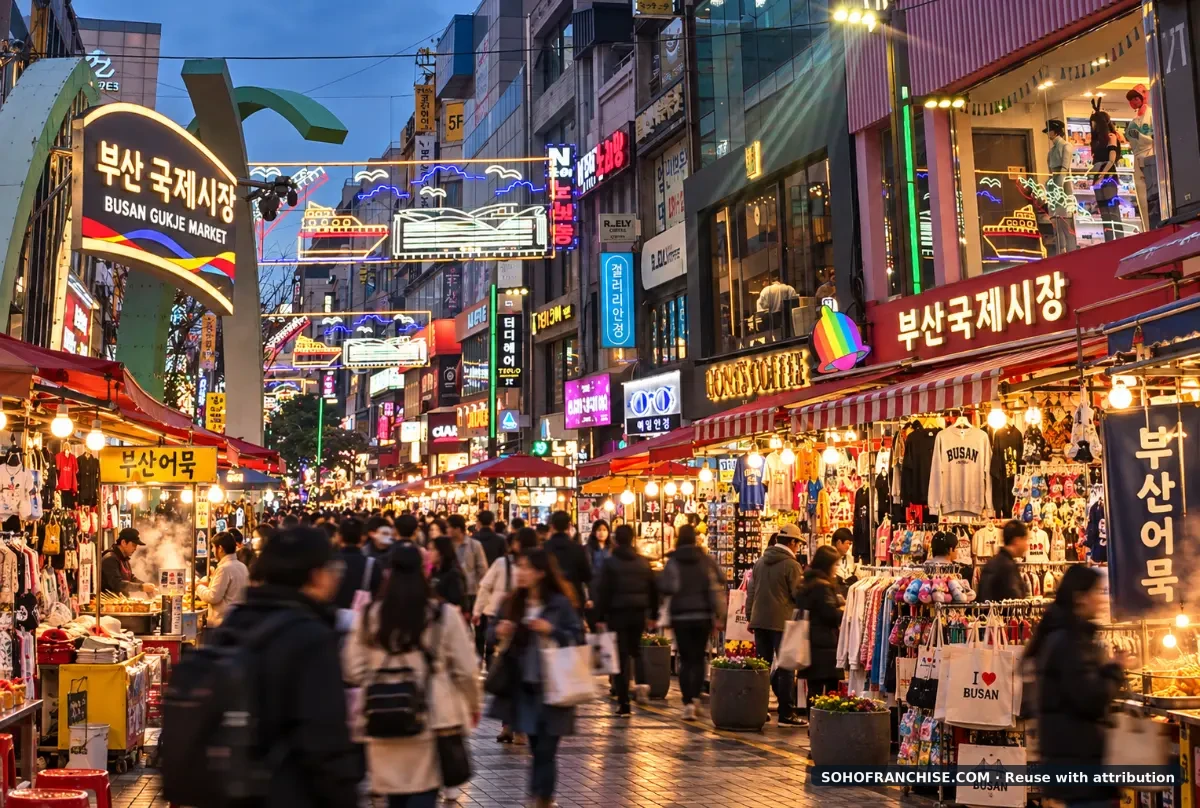
For travellers interested in photography, the period around sunset and early evening is an excellent time to explore Nampo-dong.
However, Gukje Market's regular shops generally close earlier than the area's restaurants and nightlife businesses.
What to Eat Around Gukje Market
No visit to Gukje Market is complete without trying Busan's traditional market food.
Bibim Dangmyeon — Spicy Glass Noodles
Bibim dangmyeon is one of the dishes closely associated with the Gukje Market food alleys.
Chewy glass noodles are served with vegetables and a spicy seasoning sauce, creating a simple but distinctive market meal.
Busan Eomuk — Korean Fish Cakes
Busan is famous for eomuk, or fish cakes, made from processed fish paste.
They are commonly served on skewers in hot broth, making them a convenient snack during a shopping trip.
Ssiat Hotteok — Seed-Filled Sweet Pancakes
One of Busan's most recognisable street foods is ssiat hotteok, a sweet fried pancake filled with a mixture of seeds, nuts and sugar.
It is particularly popular around BIFF Square and the surrounding Nampo-dong streets.
Milmyeon — Busan's Wheat Noodles
Milmyeon is a regional Busan noodle dish made with wheat noodles, often served cold with a seasoned broth and toppings.
It is a refreshing option for visitors who want a more substantial meal after shopping.
Tteokbokki and Traditional Snacks
Spicy rice cakes, fried snacks, dumplings and Korean-style pancakes are also available in the broader traditional market district.
Check prices and ingredients before ordering, particularly if you have dietary restrictions or food allergies.
Bupyeong Kkangtong Market: The Nearby Food Destination
Only a short walk from Gukje Market is Bupyeong Kkangtong Market (부평깡통시장).
The name "Kkangtong", meaning tin can, is connected to its history of trading imported canned foods and foreign merchandise, particularly during the Korean War era.
Today, the market is well known for a lively selection of prepared foods and an evening night-market atmosphere.
Visitors can enjoy Korean fish cakes, fried snacks, rice cakes and various other street foods.
Its night-market section is usually active from around 7:30 PM, making it a good destination after an afternoon of shopping.
View Bupyeong Kkangtong Market on Google Maps
BIFF Square: Busan's Film and Street Food Culture
Another nearby attraction is BIFF Square, a pedestrian shopping and entertainment area associated with the Busan International Film Festival.
The district includes cinema-related landmarks, pavement handprints, restaurants and street-food vendors.
For visitors, it combines the entertainment culture of Busan with the everyday energy of downtown shopping streets.
Try ssiat hotteok, browse the stores and explore the small streets connecting BIFF Square with Gukje Market.
View BIFF Square on Google Maps
Yongdusan Park: A Hilltop Escape Above the Shopping Streets
After exploring the busy shops and markets, head towards Yongdusan Park, one of the best-known landmarks in Busan's old downtown.
The park sits on a hill above Nampo-dong and offers a welcome change of scenery from the surrounding commercial streets.
Visitors can access the park from the Gwangbok-ro shopping area using the outdoor escalator route.
The escalator structure provides an interesting contrast to the city's traditional markets: a modern pedestrian connection linking a busy commercial district to a historic urban park.
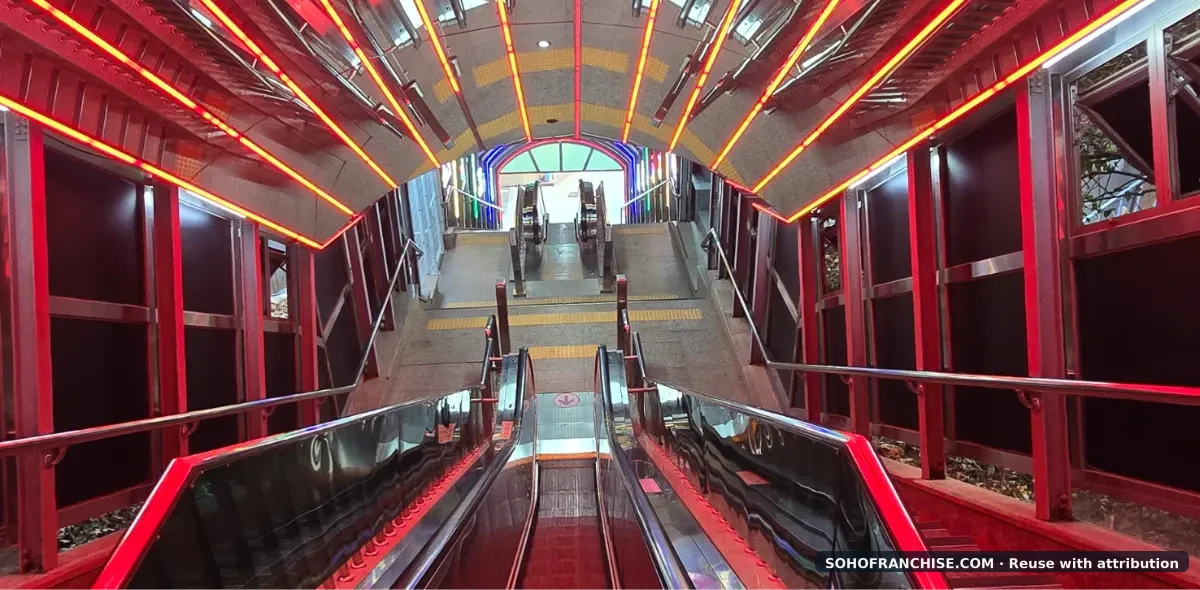
At the top, visitors can enjoy the park's open spaces and see Busan Tower, an iconic observation landmark.
The tower offers elevated views of the city and port area, subject to its admission and opening arrangements.
Yongdusan Park is a convenient place to rest after several hours of shopping.
View Yongdusan Park on Google Maps
Other Attractions Around Gukje Market
Gwangbok-ro Fashion Street
Gwangbok-ro is a modern shopping boulevard featuring fashion stores, footwear retailers, cosmetics shops and cafés.
It provides a natural connection between the traditional market district and Yongdusan Park.
Jagalchi Market
Jagalchi Market is one of South Korea's most famous seafood markets.
Visitors can see fish merchants, browse seafood products and explore restaurants specialising in fresh fish and local seafood dishes.
Bosu-dong Book Street
Bosu-dong Book Street is a historic area associated with second-hand bookstores and printed publications.
It provides a quieter cultural stop away from the main fashion and food shopping streets.
How to Get to Gukje Market
Location: Gukje Market, Jung-gu, Busan, South Korea.
Useful Korean destination: 부산 국제시장
By Subway
Take Busan Metro Line 1 to Jagalchi Station and use Exit 7. Gukje Market is approximately a 7-minute walk from the station.
Nampo Station on Line 1 is another convenient option, especially if you plan to explore Gwangbok-ro shopping street and Yongdusan Park.
From Busan Station
Take Busan Metro Line 1 towards Dadaepo Beach and get off at Jagalchi Station or Nampo Station.
The two areas are only a short subway journey from Busan Station, making this a convenient destination for travellers arriving by KTX.
By Taxi
Show the driver the Korean destination 부산 국제시장 or request Gukje Market in Jung-gu, Busan.
Google Maps: Plan Your Shopping Tour
Gukje Market:
View Gukje Market on Google Maps
BIFF Square:
View BIFF Square on Google Maps
Bupyeong Kkangtong Market:
View Bupyeong Kkangtong Market on Google Maps
Yongdusan Park:
View Yongdusan Park on Google Maps
Walking directions:
Open the Busan Shopping Walking Route
Suggested Half-Day Shopping Itinerary
- 2:00 PM — Jagalchi Station: Arrive at Exit 7 and walk towards BIFF Square.
- 2:20 PM — BIFF Square: Enjoy the film-themed street and try a Busan snack.
- 3:00 PM — Gukje Market: Explore clothing, bags, vintage fashion and household goods.
- 4:30 PM — Gwangbok-ro: Browse modern retail shops and enjoy a café break.
- 5:30 PM — Yongdusan Park: Take the escalator up to the park for city views.
- 7:30 PM — Bupyeong Kkangtong Market: Finish your day with night-market street food.
Practical Shopping Tips
- Gukje Market hours: Generally 9:00 AM–8:00 PM, varying by shop.
- Closures: Some official guides list the first and third Sundays as regular closing days; individual shops may follow different schedules.
- Payment: Cards are accepted in many stores, but carrying some cash is useful for smaller stalls.
- Prices: Compare products and ask about prices before purchasing.
- Comfort: Wear comfortable shoes because the market covers numerous connected streets.
- Photography: Ask permission before photographing individual merchants or close-up displays.
- Best time: Afternoon for shopping, followed by early evening photography and night-market food.
- Recommended duration: Approximately 4–6 hours for the wider Nampo-dong district.
Why Gukje Market Is Worth Visiting
Gukje Market is more than a place to buy inexpensive clothes, accessories or souvenirs.
Its history reflects the determination of ordinary Koreans who rebuilt their livelihoods after war and displacement.
Its commercial streets demonstrate how traditional independent merchants continue operating alongside contemporary fashion retailers and tourist businesses.
And its location in the heart of Nampo-dong makes it easy to combine shopping with traditional food, film culture and one of Busan's best-known city parks.
For international visitors, Gukje Market offers something a modern shopping mall cannot easily recreate: a living connection between Korean history, entrepreneurship and everyday urban culture.
Whether you come to shop, eat, explore or simply observe the city, the streets of old Busan offer a memorable experience.
SOHOFRANCHISE Editorial — Discover the Real Korea.