
Discover Three Faces of Historic Seoul
In the heart of Seoul, three distinctive destinations offer international visitors a journey through Korean tradition, urban transformation and everyday food culture.
Insadong is a neighbourhood of traditional crafts, galleries, souvenir shops and Korean tea houses. Nearby Cheonggyecheon Stream offers a peaceful pedestrian corridor surrounded by the modern city. Further east, Gwangjang Market brings visitors face to face with the energy of Korea's traditional markets.
Together, they form a rewarding walking itinerary that combines shopping, sightseeing, history and some of Seoul's most recognisable local foods.
For travellers who want to discover the real Korea, this is one of the most enjoyable ways to spend an afternoon in central Seoul.
Insadong: Where Korean Tradition Meets Modern Shopping
Insadong has long been associated with Korean arts, antiques, calligraphy and traditional craftsmanship.
Located in Jongno, the historic centre of Seoul, the neighbourhood developed into a cultural shopping district where visitors can browse traditional artwork alongside contemporary Korean designs.
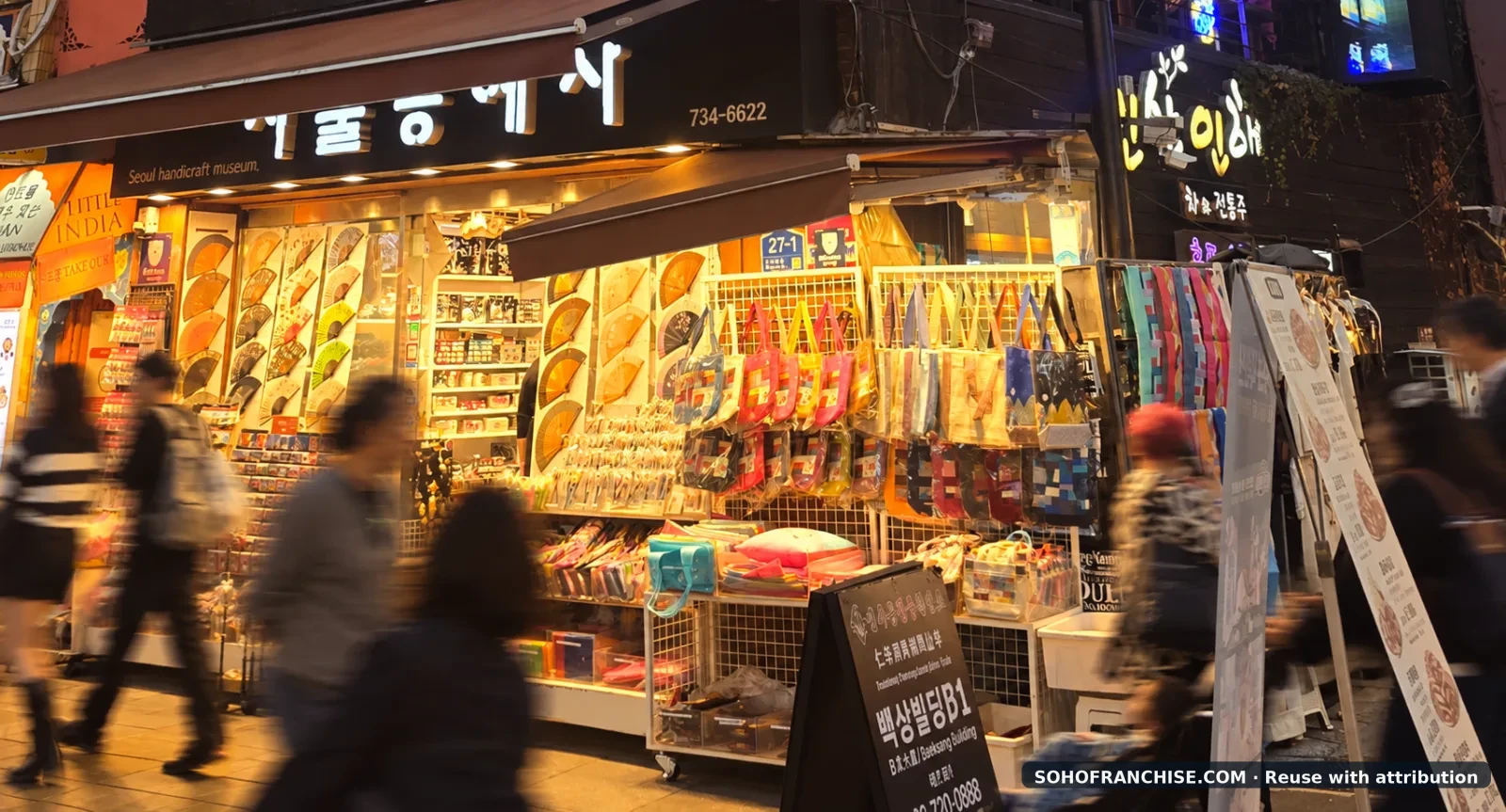
The main street, Insadong-gil, is lined with art galleries, souvenir shops, traditional paper stores, ceramics, calligraphy materials, independent boutiques and tea houses.
Unlike the fashion-oriented districts of Myeongdong or Hongdae, Insadong's commercial identity is closely connected to Korean heritage.
For international visitors, it offers an opportunity to purchase gifts that reflect Korea's artistic traditions rather than conventional mass-market souvenirs.
What to Buy in Insadong
Traditional Korean Fans
Korean folding fans, known as jeopseon, are among the most recognisable traditional souvenirs. They often feature landscape paintings, calligraphy, flowers and decorative patterns.
Visitors can find both inexpensive decorative products and more elaborate handcrafted pieces.
Hanji: Traditional Korean Paper
Hanji is traditional Korean paper, historically made using fibres from the paper mulberry tree.
It has been used for calligraphy, books, decorative objects and traditional architecture. Today, hanji is also incorporated into stationery, lamps, notebooks and contemporary design products.
Ceramics and Traditional Crafts
Small ceramic bowls, tea cups, decorative plates and handcrafted accessories are popular among visitors looking for meaningful Korean gifts.
Look for shops that identify the maker and materials, particularly if you want a genuine handcrafted item.
Korean Souvenirs and Lifestyle Products
Insadong also sells bookmarks, textiles, character goods, Korean-designed stationery, accessories and other travel gifts.
Not every product is necessarily manufactured in Korea, so travellers seeking locally made crafts should check product labels and ask shopkeepers.
Ssamziegil: A Creative Shopping Landmark
One of Insadong's most recognisable attractions is Ssamziegil, a multi-level shopping complex dedicated to traditional and contemporary Korean crafts.
Opened in 2004, the complex has a distinctive architectural layout featuring a gently rising walkway around a central courtyard.
Rather than taking conventional escalators from floor to floor, visitors can follow the continuous path through small shops, galleries and creative workshops.
Shoppers may find ceramics, handcrafted jewellery, stationery, artwork, accessories and unusual Korean gifts.
Some workshops allow visitors to experience traditional Korean crafts, including mother-of-pearl decoration and hanji-related activities.
Address: 44 Insadong-gil, Jongno-gu, Seoul.
View Ssamziegil on Google Maps
Traditional Tea Houses and Korean Food in Insadong
Shopping is only part of the Insadong experience. The surrounding alleys contain traditional restaurants and tea houses where visitors can relax in a more intimate setting.
Traditional Korean Tea
Try omija tea, jujube tea, ginger tea or other Korean herbal and fruit-based beverages.
Some traditional tea houses occupy older-style buildings decorated with wooden furniture, ceramics and Korean artwork.
Bibimbap and Korean Set Meals
Insadong is also a convenient place to try bibimbap, a rice dish with vegetables and other toppings, or a traditional Korean set meal served with several small side dishes.
Restaurants in the side alleys may offer a quieter experience than the busiest tourist-facing sections of the main street.
Cheonggyecheon: Seoul's Urban Stream
After exploring Insadong, continue towards Cheonggyecheon Stream, one of Seoul's most celebrated urban regeneration projects.
Cheonggyecheon has a long history as a waterway running through the centre of the city. During the twentieth century, much of the stream was covered by roads and elevated highway infrastructure.
In the early 2000s, Seoul undertook an ambitious restoration project to remove sections of this infrastructure and restore the stream as a public space.
The restored Cheonggyecheon opened in 2005, transforming a heavily engineered urban corridor into a pedestrian-friendly waterway.
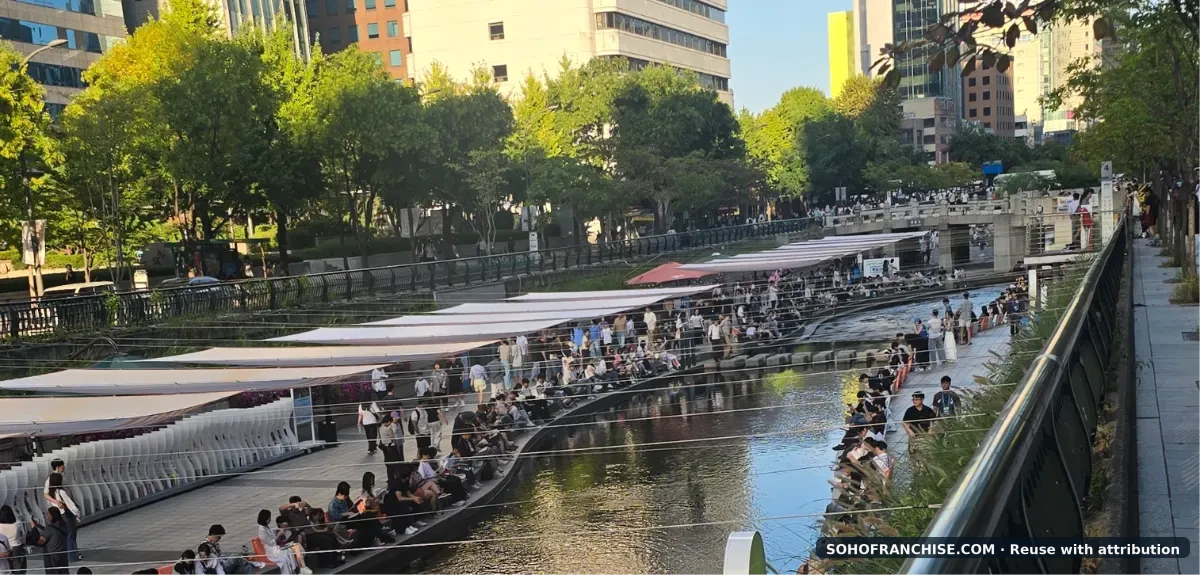
Today, visitors can walk beside flowing water beneath bridges and enjoy a different perspective on downtown Seoul.
Why Cheonggyecheon Is Special
A River Walk Below Street Level
One of Cheonggyecheon's most distinctive features is that much of its pedestrian walkway runs below the surrounding streets.
Only a short distance separates the sound of downtown traffic from the quieter atmosphere beside the water.
The stream provides a popular location for walking, photography, conversation and relaxation.
Urban Regeneration and Public Space
Cheonggyecheon's restoration is frequently discussed as an example of urban renewal.
It illustrates how a city can reconsider older transport infrastructure and create public spaces dedicated to pedestrians and recreation.
The restored waterway has become part of Seoul's modern urban identity, attracting both residents and international visitors.
Beautiful by Day and Night
During the daytime, visitors can appreciate the bridges, landscaping and contrast between the stream and surrounding office buildings.
After sunset, illuminated bridges and reflections on the water create a different atmosphere.
The stream is generally accessible around the clock, although access to lower walkways can be restricted during heavy rain or other unsafe conditions.
Walking from Insadong to Cheonggyecheon
From the southern end of Insadong, walk towards Jonggak or Jongno 3-ga and continue south to an accessible entrance along Cheonggyecheon.
Visitors who want to see the symbolic beginning of the restored stream can make a detour west to Cheonggye Plaza near Gwanghwamun.
For a more direct route towards Gwangjang Market, enter the stream around the central Jongno area and walk east along the water.
Follow the riverside pedestrian path and exit near the Gwangjang Market district.
View Cheonggyecheon on Google Maps
Gwangjang Market: A Taste of Traditional Seoul
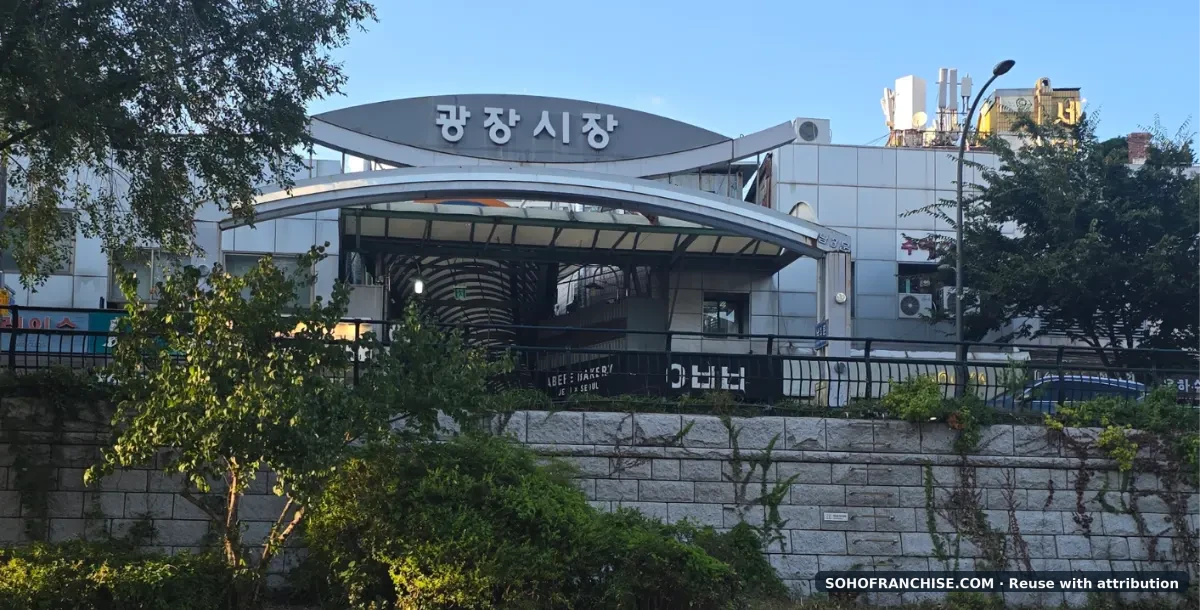
Gwangjang Market is one of Seoul's oldest and best-known traditional markets.
Established in 1905, it developed as a commercial centre for clothing, textiles and everyday goods.
Today, it remains an active market where traditional shopping and contemporary food tourism exist side by side.
For many international visitors, the main attraction is its lively food section, where vendors prepare classic Korean dishes in full view of customers.
The atmosphere is energetic, crowded and full of distinctive sounds and aromas.
Five Foods to Try at Gwangjang Market
1. Bindaetteok — Mung Bean Pancakes
Bindaetteok is made from ground mung beans mixed with other ingredients and fried until golden and crisp.
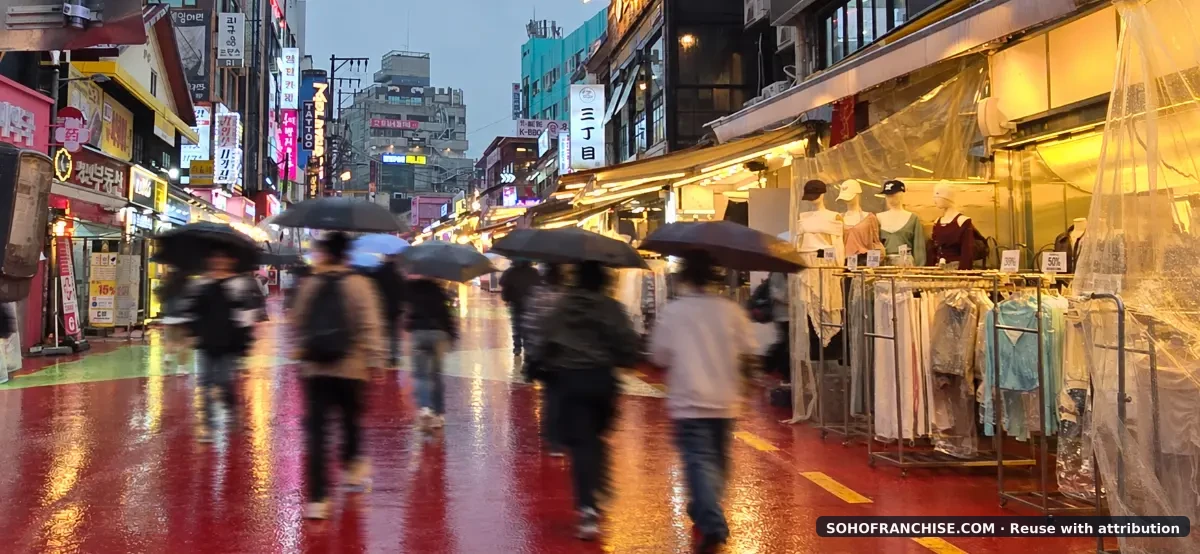
It is one of Gwangjang Market's signature dishes and is particularly satisfying on a cool or rainy day.
2. Mayak Gimbap — Small Seaweed Rice Rolls
These bite-sized rice rolls are filled with simple ingredients and commonly served with a mustard-based dipping sauce.
The word mayak, meaning "narcotic", is an informal nickname referring to their supposedly addictive taste. The dish does not contain narcotics.
3. Kalguksu — Handmade Noodle Soup
Kalguksu is a comforting noodle soup made with knife-cut wheat noodles.
Visitors can often watch vendors prepare the noodles and assemble the dish at the counter.
4. Yukhoe — Korean Beef Tartare
Yukhoe is a traditional Korean dish made from seasoned raw beef.
It is well known in the Gwangjang Market area, but visitors should be aware that consuming raw meat carries additional food-safety risks.
5. Tteokbokki — Spicy Rice Cakes
Tteokbokki consists of chewy rice cakes usually served in a spicy, savoury sauce.
It is one of Korea's most familiar street foods and an approachable choice for visitors interested in popular Korean snacks.
Beyond Food: Textiles, Hanbok and Vintage Shopping
Gwangjang Market is not simply a street-food attraction.
The market also has a long commercial history connected to textiles, fabrics, clothing and traditional Korean garments.
Visitors can browse fabric shops, hanbok-related businesses and clothing stalls in sections beyond the main food aisles.
Some areas specialise in traditional materials used for clothing, while others offer everyday garments and vintage fashion.
For travellers interested in Korea's retail history, exploring these quieter commercial sections reveals the market's continuing importance beyond tourism.
Three Different Shopping Experiences
| Area | Main Experience | Best For |
|---|---|---|
| Insadong | Traditional crafts, art, souvenirs and tea | Cultural shopping and gifts |
| Cheonggyecheon | Urban stream and pedestrian walking | Relaxation, photography and sightseeing |
| Gwangjang Market | Traditional foods, textiles and clothing | Local cuisine and market culture |
How to Get There by Subway
Insadong
Take Seoul Subway Line 3 to Anguk Station. Exit 6 provides convenient access to the northern end of Insadong.
Jonggak Station on Line 1 is another option for visitors approaching from the southern side.
Cheonggyecheon Stream
Cheonggyecheon has multiple access points along its length. Gwanghwamun, Jonggak, Jongno 3-ga and Jongno 5-ga stations provide access to different sections.
Gwangjang Market
Take Subway Line 1 to Jongno 5-ga Station and use Exit 8.
Market address: 88 Changgyeonggung-ro, Jongno-gu, Seoul.
Google Maps: Plan Your Walking Route
Insadong Shopping Street
Ssamziegil Shopping Complex
View Ssamziegil on Google Maps
Cheonggyecheon Stream
View Cheonggyecheon on Google Maps
Gwangjang Market
View Gwangjang Market on Google Maps
Walking Directions: Insadong to Gwangjang Market
Open the Walking Route on Google Maps
Suggested Half-Day Walking Itinerary
- 1:00 PM — Anguk Station: Arrive at Exit 6 and begin exploring Insadong's traditional shopping streets.
- 1:30 PM — Ssamziegil: Browse Korean crafts, design products and souvenir shops.
- 2:30 PM — Traditional Tea: Enjoy Korean tea or dessert at an Insadong teahouse.
- 3:15 PM — Cheonggyecheon: Walk south from Insadong and join the restored stream.
- 4:00 PM — Stream Walk: Continue east towards the Gwangjang Market area, taking breaks as needed.
- 5:00 PM — Gwangjang Market: Explore food stalls and sample traditional Korean dishes.
- 6:00 PM — Traditional Shopping: Browse any clothing or textile sections that remain open, or finish your food tour.
Practical Travel Tips
- Recommended duration: Approximately 4–5 hours including shopping, dining and walking.
- Comfortable shoes: The itinerary involves substantial walking between neighbourhoods.
- Shopping: Compare prices and check product origins when purchasing traditional crafts.
- Market dining: Check posted prices before ordering. Carry some cash, although payment options vary by vendor.
- Food allergies: Confirm ingredients directly with vendors, especially when dishes contain meat, seafood, wheat or nuts.
- Rainy weather: Cheonggyecheon's lower pedestrian paths may close for safety during heavy rain.
- Market opening hours: Individual vendors vary. Gwangjang Market's food section generally operates later than its textile shops.
- Public transport: Anguk Station is convenient for starting, while Jongno 5-ga Station is useful for departing.
Why These Three Destinations Belong Together
Insadong, Cheonggyecheon and Gwangjang Market represent three interconnected layers of Seoul.
Insadong preserves the city's association with traditional arts, crafts and cultural shopping.
Cheonggyecheon demonstrates how modern Seoul has transformed former road infrastructure into an accessible public space.
Gwangjang Market continues the commercial traditions of the city through its food vendors, textile merchants and lively market atmosphere.
What makes this journey memorable is the contrast. Within one afternoon, travellers can browse decorative Korean fans, enjoy tea, walk beside a restored stream and finish with freshly prepared market food.
It is an experience that reveals both the historical character and everyday energy of the Korean capital.
SOHOFRANCHISE Editorial — Discover the Real Korea.
Photography and local perspectives from Seoul.