
Beyond K-Food: Wine Finds Its Place in Korea’s Tourism Experience
South Korea has become one of Asia's most exciting destinations for international travelers. From Seoul's traditional neighborhoods and contemporary restaurants to its expanding hospitality scene, visitors are discovering a country where cultural heritage and modern lifestyles coexist.
Alongside Korean cuisine, cafés and nightlife, wine is becoming another way for travelers to experience the country's evolving food and beverage culture.
For wine professionals, this presents an interesting question: Can South Korea's growing international tourism industry create new opportunities for its wine market?
International Tourism Creates New Hospitality Opportunities
According to South Korea's Ministry of Culture, Sports and Tourism, the country welcomed approximately 15.05 million international visitors during the first eight months of 2026, an increase of 21.6% compared with the same period in 2025.
The expansion of international tourism creates opportunities not only for hotels and restaurants but also for businesses offering distinctive culinary experiences.
Wine bars, hotel lounges, outdoor tasting events and restaurants with carefully selected wine lists can become part of the visitor experience. For international travelers, wine is a familiar beverage that can offer an accessible connection to Korea's increasingly diverse dining scene.
Korea's Wine Market Is Entering a More Selective Phase
While tourism is expanding, the Korean wine market is undergoing a different kind of transition.
Following strong growth during the pandemic, the market has experienced a correction. According to Korea Customs Service trade statistics reported in 2026, South Korea imported approximately USD 434 million worth of wine in 2025, down 6.0% from the previous year. Import volume, however, increased by approximately 8.8%.
This divergence suggests that Korean wine consumers are becoming more selective about price and value rather than simply abandoning wine.
The changing market creates opportunities for wine suppliers who can combine quality, reasonable pricing and thoughtful customer education.
From Wine Consumption to Wine Experiences
A bottle of wine can be enjoyed at home, but wine also offers something particularly valuable to the tourism industry: an experience that can be shared.
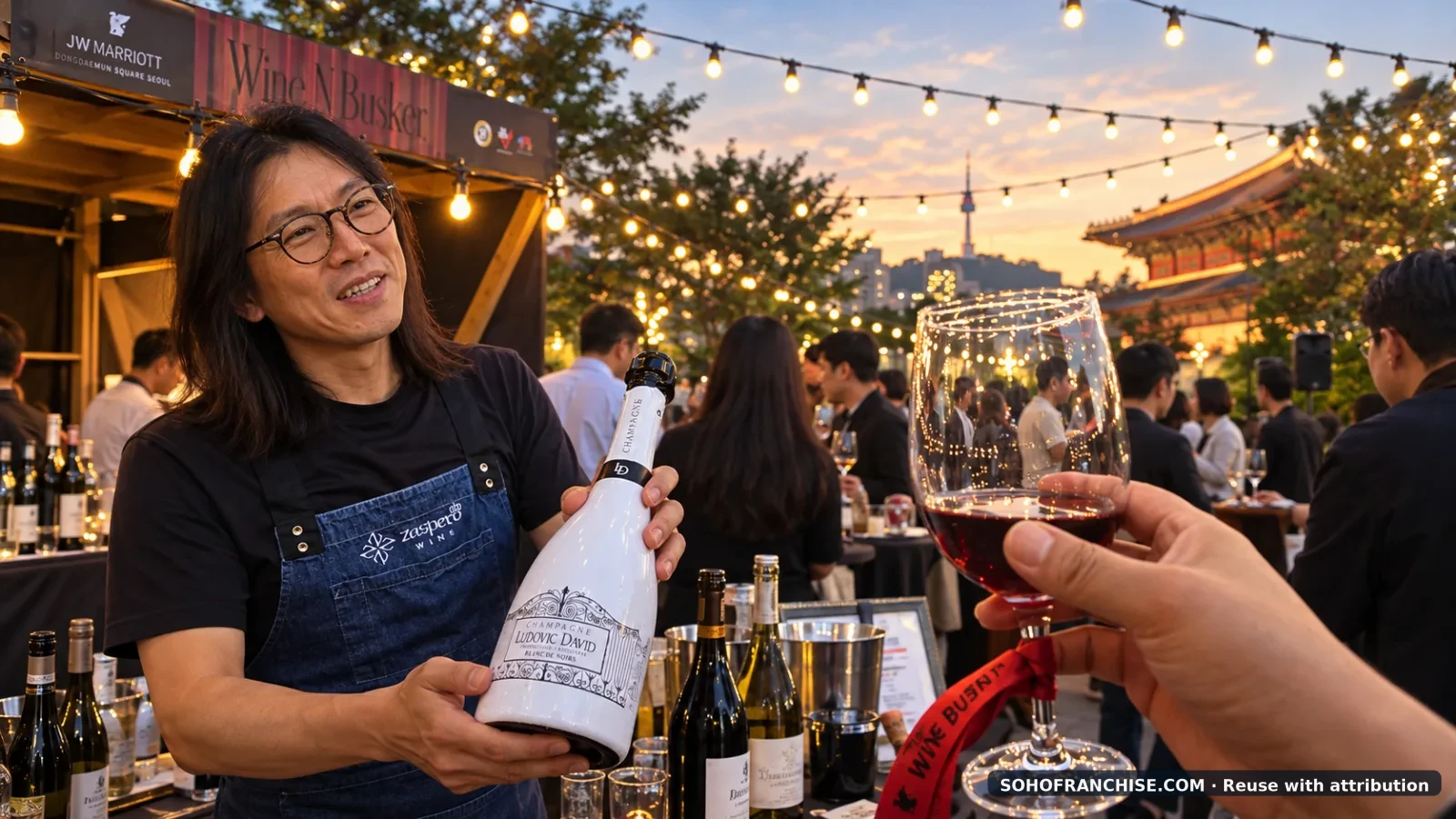
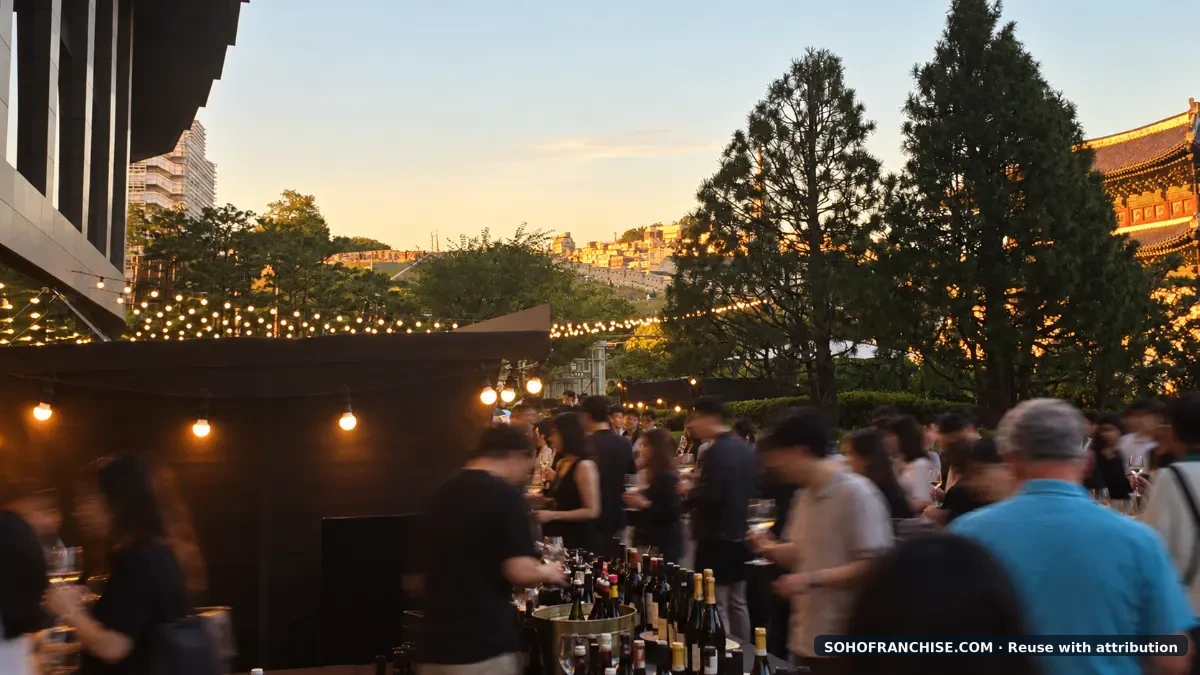
Outdoor wine festivals, restaurant pairing dinners, guided tastings and conversations with wine experts introduce visitors to different regions, grape varieties and winemaking traditions.
At a wine event in Seoul, visitors may encounter Champagne from France, white wines from New Zealand or wines from smaller European producers while enjoying the atmosphere of the city.
Such experiences can bridge international wine traditions and Korean hospitality.
For restaurants and tourism operators, the opportunity extends beyond selling individual bottles. A memorable wine experience can encourage visitors to spend more time exploring a neighborhood, discover independent restaurants and share their experiences with others.
Korean Cuisine and Wine: A Growing Opportunity
Korean cuisine offers a wide variety of flavors, from grilled meats and seafood to fermented vegetables, savory pancakes and delicate seasonal dishes.
Although traditional Korean alcoholic beverages remain important to local food culture, international wines offer additional pairing possibilities.
Crisp white wines can complement seafood and vegetable dishes, sparkling wines can work with fried foods and savory Korean pancakes, and carefully selected lighter red wines may accompany grilled meats.
For international visitors, pairing Korean cuisine with familiar wine styles can be an inviting way to explore local food traditions.
Restaurants that provide clear wine descriptions, knowledgeable service and approachable pairing recommendations may be particularly well positioned to serve a diverse international clientele.
Why Wine Education Matters
As consumers become more selective, knowledgeable wine service may become an increasingly important differentiator.
Customers do not always need an expensive bottle. They often need understandable explanations of wine characteristics, food compatibility and value.
Independent wine specialists, including businesses such as Jaspero Wine, can contribute through tastings, curated selections and education that make wine more accessible to both Korean consumers and international visitors.
For hospitality businesses, this suggests a shift from product-focused selling toward experience-led service.
The Next Opportunity for Korea's Wine and Tourism Industries
South Korea's tourism growth does not automatically guarantee expansion in wine sales. Consumer spending patterns, competition from other beverages and changing drinking habits remain important considerations.
Nevertheless, the intersection of tourism, food culture and wine presents meaningful opportunities.
Hotels, independent restaurants, specialized wine retailers and event organizers can collaborate to create experiences that combine local cuisine, international wines and Korea's distinctive urban culture.
Ultimately, the future of Korea's wine hospitality sector may depend less on how many bottles are sold and more on how successfully wine becomes part of memorable dining and travel experiences.
Contributor
Donghwan Kim
Wine Expert, Zaspero Wine, South Korea
Editor's note: This article is an editorial draft prepared for contributor review. Final opinions, professional insights and the contributor byline are subject to confirmation by Donghwan Kim.
Sources:
Ministry of Culture, Sports and Tourism, South Korea — International visitor arrivals, September 28, 2026.
Korea Customs Service trade statistics — 2025 wine imports, as reported by The Asia Business Daily, February 10, 2026.