
A Peaceful Temple Hidden in Seoul's Seongbuk-dong
Seoul is famous for its royal palaces, colourful shopping streets and modern skyline. Yet just north of the historic city centre lies a different side of the Korean capital: Seongbuk-dong, a leafy neighbourhood filled with traditional houses, cultural landmarks and quiet hillside paths.
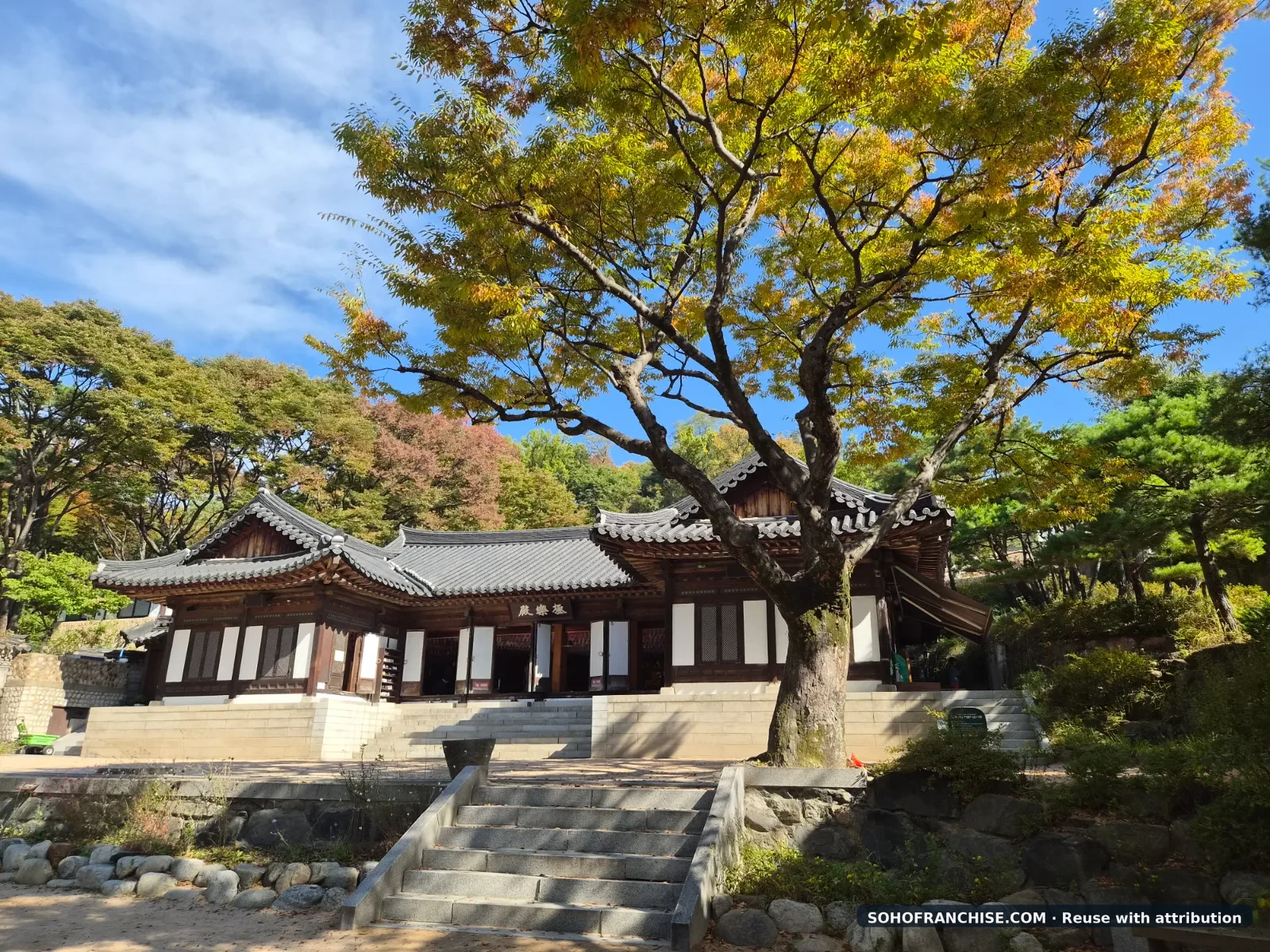
One of its most remarkable destinations is Gilsangsa Temple (길상사), a Buddhist sanctuary nestled against the southern slopes of the mountains overlooking Seoul.
With beautifully decorated gates, elegant wooden buildings, landscaped gardens and mature trees, Gilsangsa offers visitors a chance to escape the city's busy streets without leaving Seoul.
But what makes this temple truly extraordinary is its history. Before becoming a spiritual retreat, the property was one of Korea's most exclusive traditional dining establishments.
From Daewongak to Gilsangsa: An Extraordinary Transformation
Long before the opening of Gilsangsa in 1997, the property was known as Daewongak, an upscale Korean dining and entertainment establishment, or yojeong, frequented by wealthy and influential guests.
During the decades when South Korea was undergoing rapid political and economic change, establishments such as Daewongak provided private settings for formal entertainment, social gatherings and meetings among political and business figures.
The owner, Kim Young-han (1916–1999), became the central figure in the property's transformation.
After reading the Buddhist monk Beopjeong's celebrated book Non-Possession (Musoyu), she was deeply moved by his philosophy of simplicity and freedom from material attachment.
In 1987, she approached the monk with an extraordinary offer: she wished to donate the entire Daewongak estate so that it could become a place of Buddhist practice and reflection.
Beopjeong initially declined the generous offer. However, after years of persistence, the donation was eventually accepted, and preparations began to transform the former dining establishment into a temple.
On December 14, 1997, Gilsangsa officially opened as a Buddhist sanctuary, marking a remarkable transition from a place associated with wealth and exclusivity to one dedicated to contemplation and spiritual practice.
Kim Young-han, Poet Baek Seok and a Story of Love
Kim Young-han's life is also connected to one of the most poignant literary stories of modern Korea.
In her younger years, she was romantically involved with Baek Seok (1912–1996), an important Korean poet whose literary work continues to be admired.
Baek Seok called her Jaya, a name that would remain closely associated with their relationship. Their lives were separated by the turbulent circumstances of twentieth-century Korean history, but their story endured in literary memory.
Kim later became a successful businesswoman and the owner of Daewongak. Her decision to give away this valuable property has often been understood through the combined themes of love, generosity and spiritual reflection.
At Gilsangsa, this personal history remains an essential part of the temple's identity, adding a human dimension to its religious and architectural significance.
Beopjeong and the Philosophy of Non-Possession
Venerable Beopjeong (1932–2010) was one of Korea's best-known Buddhist monks and essayists.
His writings emphasised simple living, self-reflection, compassion and the importance of finding freedom beyond material possessions.
His book Musoyu, often translated as Non-Possession, inspired readers across generations, including Kim Young-han.
Gilsangsa became closely associated with his teachings and the Clean and Fragrant movement, which encourages individuals to live with greater awareness, kindness and responsibility.
Today, the temple represents more than religious practice. It also introduces visitors to a philosophy that asks a timeless question: how much do we truly need to live a meaningful life?
Architecture, Gardens and the Beauty of the Seasons
Unlike ancient Korean Buddhist temples founded hundreds of years ago, Gilsangsa retains elements of its former life as Daewongak.
Its buildings are distributed throughout landscaped grounds, connected by sloping paths, stone steps and peaceful gardens.
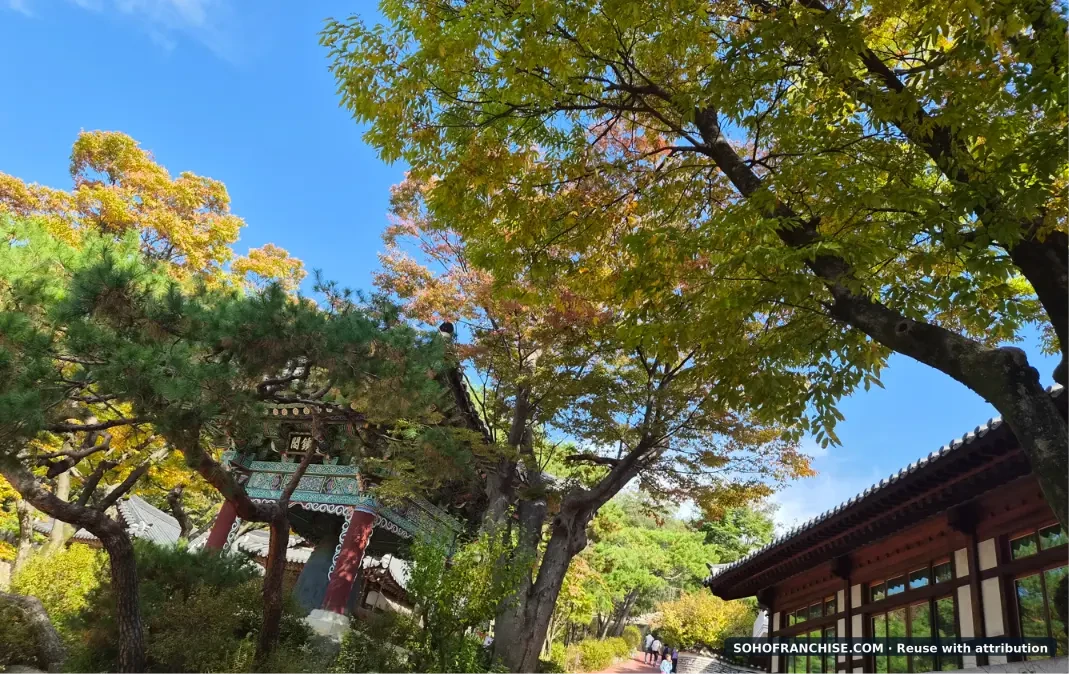
The entrance gate, decorated with colourful traditional Korean patterns known as dancheong, offers a striking welcome.
Beyond the gate, visitors encounter traditional wooden halls, stone monuments, prayer spaces and quiet pathways beneath mature trees.
The temple is particularly beautiful during autumn, when green leaves gradually turn yellow, orange and red against the dark tiled roofs.
Spring offers fresh foliage and seasonal flowers, while summer brings rich greenery and welcome shade.
For visitors who enjoy photography, architecture or simply walking outdoors, Gilsangsa offers memorable scenery throughout the year.
Art and Religious Harmony
One of the distinctive features of Gilsangsa is its connection with religious harmony.
At the temple's opening ceremony in 1997, Cardinal Stephen Kim Sou-hwan, an influential Korean Catholic leader, was among the attendees.
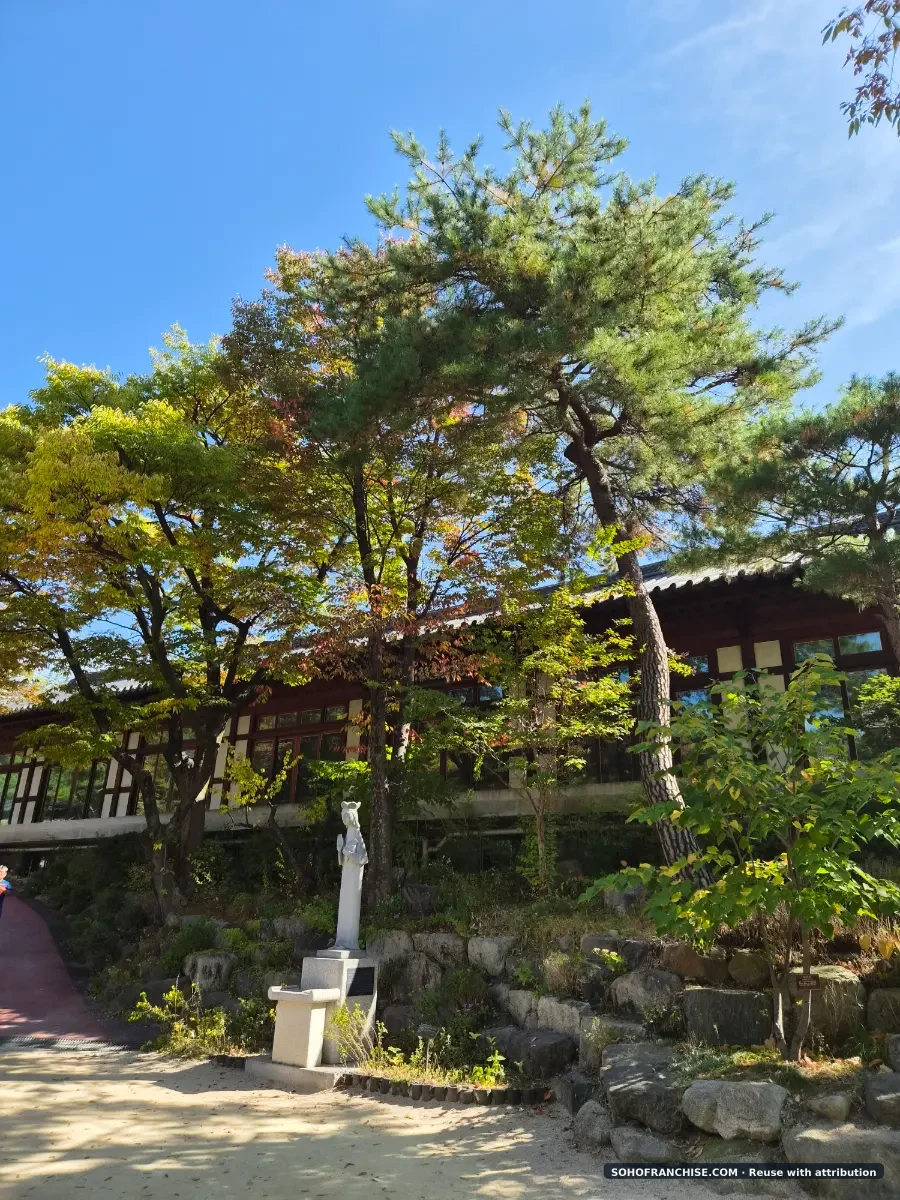
The temple also features a sculptural representation of Gwaneum, the Bodhisattva of Compassion, created by Catholic artist Choi Jong-tae.
Its gentle appearance has often been compared with representations of the Virgin Mary, offering a meaningful visual expression of dialogue between religious traditions.
For international travellers, this provides an interesting perspective on Korea's cultural and spiritual diversity.
A Place for Quiet Reflection
Visitors do not need to be Buddhist to appreciate Gilsangsa.
The sound of wind passing through the trees, quiet footsteps on stone pathways and the atmosphere of the temple buildings create a natural space for reflection.
Unlike some of Seoul's busiest attractions, Gilsangsa rewards visitors who take their time.
Walk slowly along the hillside paths, admire the architectural details, listen to the surroundings and enjoy a few moments away from the pace of modern urban life.
Visitors should remember that Gilsangsa is an active religious site. Speak quietly, respect worshippers and follow any signs restricting photography or access.
Explore More of Seongbuk-dong
Gilsangsa is an excellent starting point for discovering Seongbuk-dong, one of Seoul's most rewarding neighbourhoods for travellers interested in history, literature, architecture and traditional Korean culture.
Simujang: The Home of Independence Activist Han Yong-un
Simujang was the final home of Han Yong-un, also known as Manhae, a Buddhist monk, poet and independence activist.
Built in 1933, the modest house is associated with his literary work and resistance to Japanese colonial rule.
Visitors can explore another important connection between Korea's Buddhist heritage and modern history.
Suyeonsanbang: Traditional Tea in a Writer's Former Home
Suyeonsanbang is a traditional Korean teahouse housed in the former residence of novelist Lee Tae-jun.
Its traditional architecture and intimate atmosphere make it a natural place to stop for Korean tea after exploring the neighbourhood.
Try jujube tea, omija tea or other seasonal Korean refreshments while enjoying the character of this historic residential district.
Choi Sunu House
The former home of art historian and National Museum of Korea director Choi Sunu offers another perspective on traditional Korean residential architecture.
The preserved hanok celebrates the beauty of everyday Korean design and the cultural legacy of a scholar who worked to preserve Korea's artistic heritage.
Seongbuk-dong's Galleries and Cultural Streets
Beyond the major historic attractions, Seongbuk-dong has independent galleries, neighbourhood cafés, traditional restaurants and attractive residential streets.
It offers a slower, more intimate alternative to the crowded shopping districts of central Seoul.
What to Eat Around Gilsangsa Temple
Seongbuk-dong is also a rewarding neighbourhood for travellers interested in traditional Korean cuisine.
Korean Home-Style Meals
Explore local restaurants serving rice, soup, seasonal vegetables, kimchi and other banchan side dishes. These comforting meals are a wonderful introduction to traditional Korean food culture.
Noodles and Dumplings
Kalguksu, handmade knife-cut noodle soup, and mandu, Korean dumplings, are popular choices for a satisfying lunch after walking through the neighbourhood.
Korean Barbecue and Traditional Restaurants
Seongbuk-dong also offers Korean barbecue restaurants and established eateries where visitors can enjoy a more leisurely meal.
Traditional Tea and Cafés
For a quieter experience, choose a small independent café or traditional teahouse. Suyeonsanbang is especially interesting because it combines refreshments with the cultural history of a Korean writer's former residence.
How to Get to Gilsangsa Temple
Address: 68 Seonjam-ro 5-gil, Seongbuk-gu, Seoul, South Korea
Korean: 서울특별시 성북구 선잠로5길 68
By Subway and Local Bus
Take Seoul Subway Line 4 to Hansung University Station (Hansungdae-ipgu Station). From Exit 6, take local Seongbuk Village Bus No. 02 (성북02) and get off at Gilsangsa Temple.
This is a convenient option because the temple sits uphill from the main road.
On Foot
Travellers who enjoy walking can reach Gilsangsa from Hansung University Station through the streets of Seongbuk-dong. Allow approximately 30 minutes, depending on your route and pace.
The walk includes uphill sections, so comfortable footwear is recommended.
By Taxi
Show the driver the destination 길상사 or the Korean address 서울특별시 성북구 선잠로5길 68.
Google Maps:
View Gilsangsa Temple on Google Maps
Get Directions from Hansung University Station
Visitor Information
- Admission: Free.
- Temple grounds: Generally accessible daily; individual buildings and activities may have restricted hours.
- Recommended visit: 45–90 minutes.
- Nearest subway: Hansung University Station, Line 4.
- Local bus: Seongbuk Village Bus No. 02.
- Telephone: +82-2-3672-5945.
- Temple website: https://www.kilsangsa.info
Temple activities, guided programmes and visitor access arrangements may change. Check official information before your visit.
Suggested Half-Day Seongbuk-dong Walking Itinerary
- 10:00 AM: Arrive at Hansung University Station and travel to Gilsangsa.
- 10:20 AM: Explore the entrance gate, temple gardens and major halls.
- 11:30 AM: Continue through Seongbuk-dong's quiet historic streets.
- 12:00 PM: Enjoy a traditional Korean lunch in the neighbourhood.
- 1:00 PM: Visit Simujang, the former home of Han Yong-un.
- 2:00 PM: Relax with tea at Suyeonsanbang or explore other cultural landmarks.
Why Gilsangsa Is Worth Visiting
Gilsangsa is not simply another Buddhist temple on a Seoul sightseeing itinerary.
Its transformation from the exclusive Daewongak establishment into a sanctuary open to the public tells a deeply human story about generosity, spiritual values and the possibility of change.
Combined with the literary heritage of Kim Young-han and Baek Seok, the teachings of Beopjeong, and the peaceful scenery of Seongbuk-dong, Gilsangsa offers visitors something increasingly rare in a fast-moving capital: space to slow down and reflect.
For international travellers seeking a more personal encounter with Korean history and culture, this beautiful temple is one of Seoul's hidden treasures.
SOHOFRANCHISE Editorial — Discover the Real Korea. Independent stories, local perspectives and experiences beyond the guidebook.