
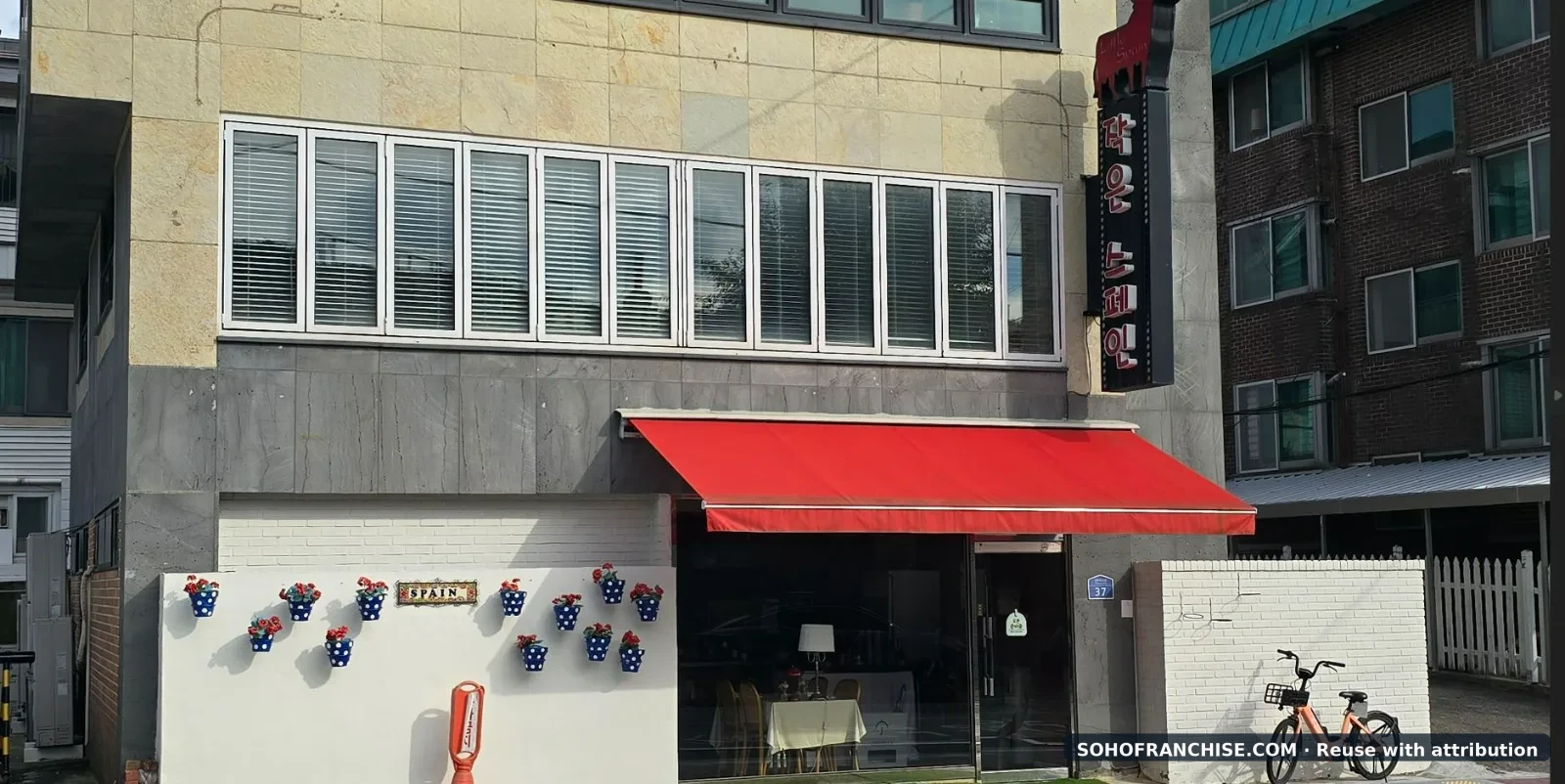
Spanish cuisine occupies an unusual but increasingly interesting position in Korea's restaurant market.
It is no longer unfamiliar. Many Korean consumers already recognize paella, gambas al ajillo, jamón ibérico, sangria and Spanish wine. Yet Spanish dining remains much less standardized than pizza, pasta, Japanese restaurants or Korean barbecue.
That may actually be its strength.
Rather than competing as another mass-market restaurant category, Spanish restaurants in Korea are developing as experience-oriented dining businesses built around food, wine, atmosphere and location.
Seoul: From Itaewon to Yeonhui-dong
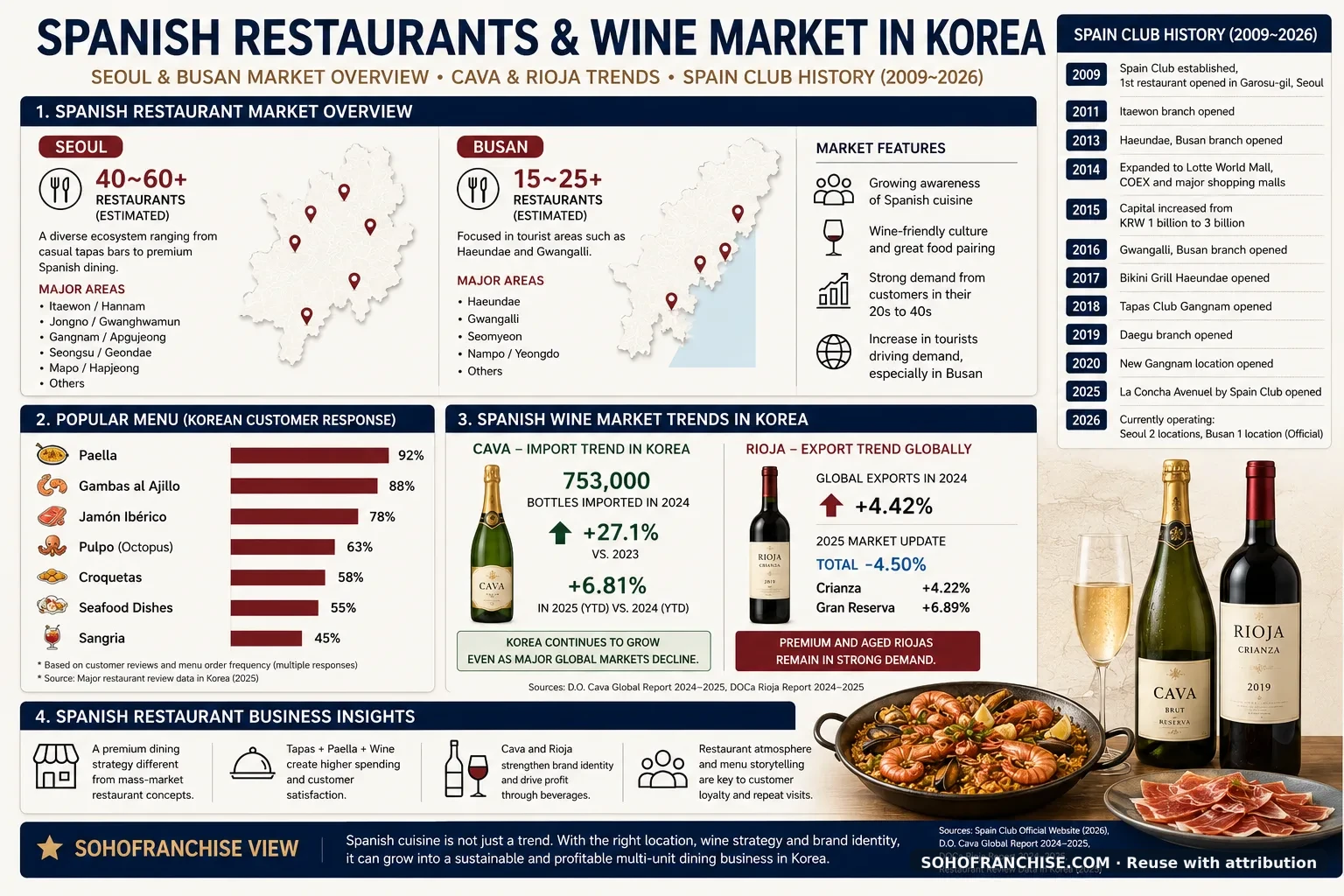
There is no official Korean restaurant census that separately counts Spanish restaurants, so an exact nationwide store number would be misleading.
What can be observed, however, is that Seoul now has a recognizable ecosystem of Spanish restaurants, tapas bars and wine-oriented dining concepts.
They are found not only in major nightlife and commercial districts such as Itaewon, Hannam, Gangnam and Jongno, but also increasingly in neighborhoods where customers actively seek independent restaurants with character.
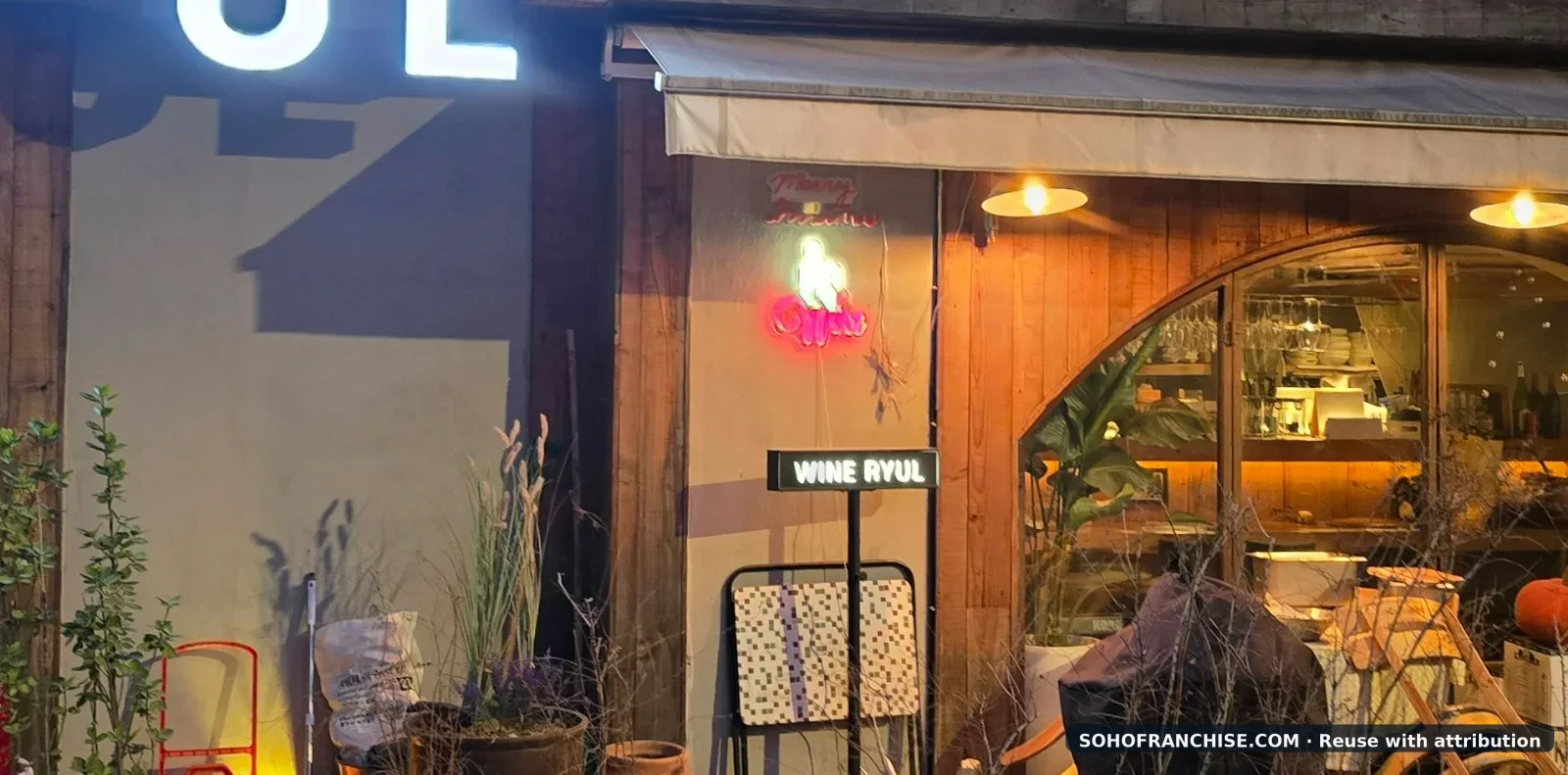
Yeonhui-dong is a good example.
Unlike a large shopping mall or high-traffic station district, Yeonhui-dong attracts customers who often visit specifically for cafés, bakeries and independent restaurants. A Spanish restaurant in this type of neighborhood does not need to compete only on convenience or price.
It can compete through atmosphere, chef identity, wine selection and a sense of discovery.
This may represent an important future model for Spanish dining in Seoul: a smaller neighborhood restaurant with a strong identity rather than a standardized mass-market chain.
Busan: Spanish Food Meets the Sea
Busan presents a different opportunity.
The Spanish restaurant market is smaller than Seoul's, but the city's tourism economy can make individual locations particularly powerful.
Haeundae is perhaps the clearest example.
Spain Club Haeundae demonstrates how location itself can become part of the restaurant product.
The combination of Spanish food, wine, seaside atmosphere and Haeundae's tourism traffic creates something that is difficult for an ordinary urban restaurant to reproduce.
A customer is not simply buying paella.
The customer is buying dinner near the sea, a bottle of wine, an evening atmosphere and the memory of being in Busan.
This distinction matters commercially.
In a tourism district, a restaurant may be able to achieve a higher average ticket because customers are more willing to order appetizers, wine and desserts when the meal itself is part of the travel experience.
For Spanish cuisine, this is particularly powerful because tapas and wine naturally encourage customers to stay longer and order multiple items.
Spain Club: A Korean Spanish Restaurant Case Study
Spain Club provides one of the most useful examples of how Spanish dining has developed in Korea.
The company was created in Korea to introduce Spanish food and dining culture to Korean consumers.
| Year | Development |
|---|---|
| 2009 | Spain Club established and first restaurant opened in Garosu-gil, Seoul |
| 2011 | Itaewon location opened |
| 2013 | Expanded to Busan with the Haeundae restaurant |
| 2014 | Entered major commercial complexes including Lotte World Mall and COEX |
| 2015 | Capital increased from KRW 1 billion to KRW 3 billion |
| 2016 | Additional Busan expansion into Gwangalli |
| 2017 | Bikini Grill launched in Haeundae |
| 2018 | Tapas Club concept launched in Gangnam |
| 2019 | Expanded to Daegu |
| 2020 | New Gangnam location opened |
| 2025 | La Concha Avenuel by Spain Club introduced |
The history is interesting because Spain Club did not simply expand one identical restaurant format.
It experimented with different locations, commercial districts and restaurant concepts.
Its development suggests that Spanish dining in Korea may work better as a selective multi-location restaurant business than as a conventional large-scale franchise with hundreds or thousands of identical stores.
What Korean Customers Recognize First
Several dishes have emerged as the entry point to Spanish cuisine for Korean customers.
| Menu | Business Role | Why It Works in Korea |
|---|---|---|
| Paella | Signature main dish | Highly visual, shareable and strongly associated with Spain |
| Gambas al Ajillo | Tapas / starter | Garlic and shrimp are familiar flavors for Korean customers |
| Jamón Ibérico | Premium tapas | Strong wine pairing and premium image |
| Pulpo | Seafood tapas | Octopus is familiar to Korean diners but presented differently |
| Croquetas | Casual sharing food | Easy to understand and easy to share |
| Seafood dishes | Main / sharing dishes | Particularly suitable for Busan and coastal locations |
| Sangria | Entry-level beverage | Accessible introduction to Spanish drinking culture |
Why Gambas Works So Well
Gambas al ajillo may be one of the strongest examples of a Spanish dish that entered the Korean market without requiring major localization.
Shrimp, garlic, olive oil and bread are easy to understand. The dish arrives hot, looks attractive on the table and naturally encourages customers to order additional bread, beer or wine.
From an operator's perspective, it also offers relatively straightforward preparation compared with more complex main dishes.
Paella plays a different role.
It is the visual centerpiece of the Spanish dining experience.
A large pan placed in the middle of the table reinforces the idea of sharing, and it is highly suitable for social media photographs.
But paella requires more preparation time and can become a bottleneck during busy periods.
A successful Spanish restaurant therefore benefits from a balanced menu:
quick tapas for table turnover and beverage sales, combined with signature dishes that create identity.
Cava Is Becoming More Interesting in Korea
Wine may be one of the most important elements in the future economics of Spanish restaurants.
Cava, Spain's traditional-method sparkling wine, has shown particularly encouraging signs in the Korean market.
| Cava in South Korea | Market Indicator |
|---|---|
| 2024 shipments | Approximately 753,000 bottles |
| 2024 year-on-year growth | +27.1% |
| 2025 market growth | +6.81% year-on-year |
This is commercially important for restaurants.
Cava can be served before the meal, with seafood, with fried tapas or throughout dinner. It also gives customers a sparkling-wine experience at a price position that can often be more approachable than Champagne.
For operators, this creates an opportunity to increase average spending without increasing the number of tables.
Tapas + Cava Could Become a Recognizable Pairing
One of the reasons Japanese restaurants became commercially strong in Korea was that customers learned not only the food but also the drinking culture surrounding the food.
Sushi developed a relationship with sake. Yakitori developed a relationship with beer and highballs.
Spanish restaurants have the opportunity to build similar habits.
Gambas + Cava
Seafood + Cava
Jamón + Rioja
Steak + Rioja
Paella + Spanish white wine
If customers begin to think about these combinations naturally, wine becomes part of the dining decision rather than an optional addition.
Rioja Has a Different Role
Rioja is less about easy entry and more about premiumization.
The region provides a recognizable Spanish red-wine identity, particularly through Crianza, Reserva and Gran Reserva classifications.
Rioja reported export growth of 4.42% in 2024. Although its overall market weakened in 2025, demand for some aged categories remained stronger, with Crianza and Gran Reserva performing better than the overall market.
For Korean Spanish restaurants, Rioja can therefore perform an important function even if total Korean sales remain relatively small.
It gives restaurants a natural premium beverage to pair with jamón, lamb, steak, pork and richer tapas.
A Restaurant Is Selling More Than Food
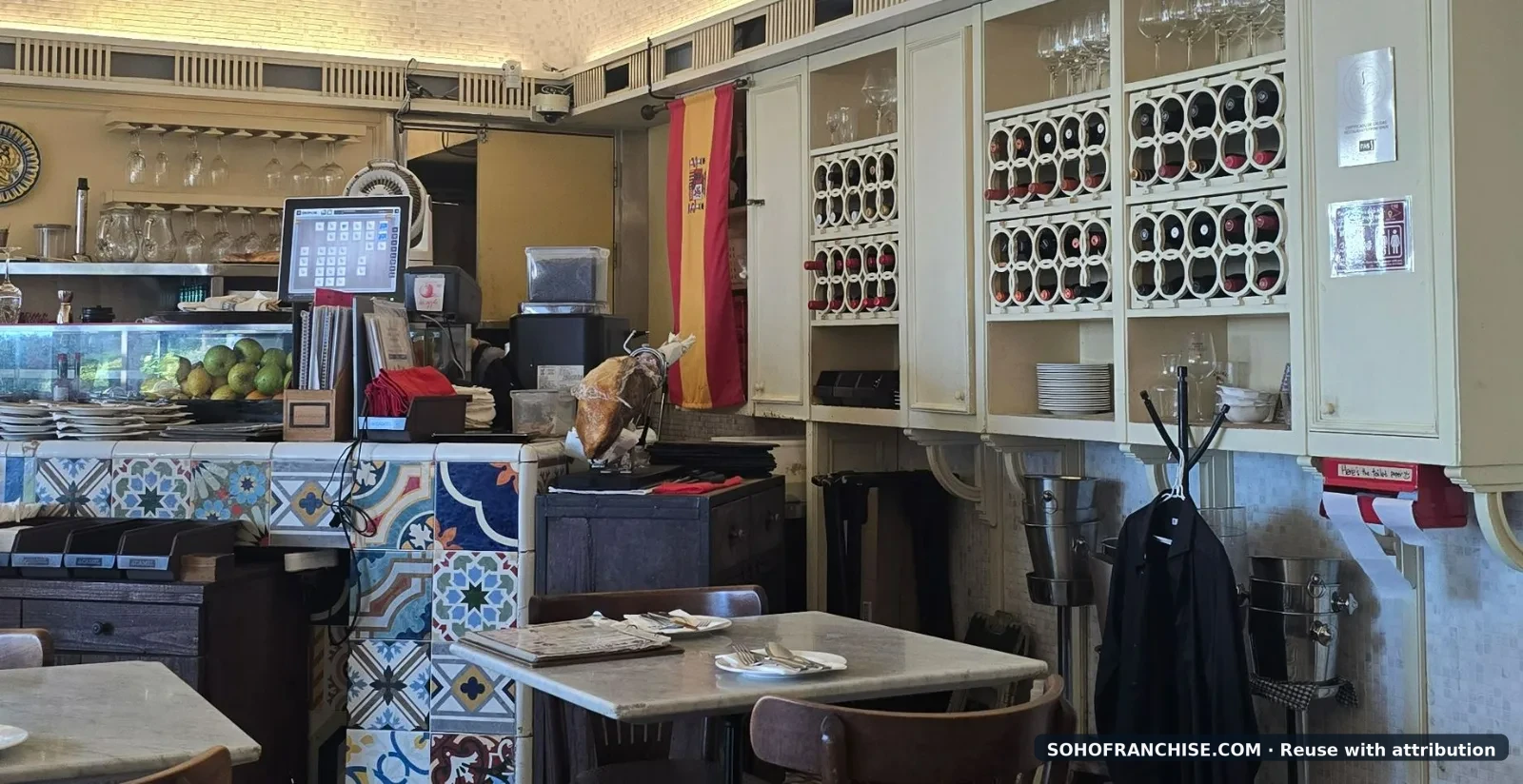
The photographs accompanying this article illustrate an important difference between Spanish restaurants and highly standardized food franchises.
The interior matters.
Wine displayed on the wall matters.
Jamón displayed near the counter matters.
The Spanish flag, tiles, glassware, lighting and music all help customers understand what type of place they have entered.
In other words, Spanish restaurants sell a combination of:
- food;
- wine;
- atmosphere;
- sharing culture;
- design;
- hospitality;
- and a small experience of Spain.
This can support a higher average ticket, but it also makes the business more difficult to standardize.
Two Different Korean Models Are Emerging
The Korean market may ultimately support two particularly interesting Spanish restaurant formats.
1. Neighborhood Spanish Restaurant
Neighborhoods such as Yeonhui-dong are suitable for smaller owner-operated restaurants where the chef, atmosphere and wine selection form the identity of the business.
A possible format could be 20 to 40 seats with:
- six to ten core tapas;
- two or three paellas;
- jamón and cheese;
- Cava by the glass;
- a carefully selected Rioja list;
- and a strong evening dining atmosphere.
This model does not require extremely high foot traffic if the restaurant becomes a destination in itself.
2. Tourism Destination Restaurant
Haeundae represents the opposite model.
Here, location and tourism traffic become central parts of the business.
A restaurant can combine:
- ocean or city views;
- tourist traffic;
- Spanish seafood dishes;
- paella;
- Cava and Rioja;
- outdoor or visually distinctive seating;
- and a memorable evening experience.
The beauty of the location becomes part of what the customer pays for.
Can Spanish Restaurants Be Franchised?
| Factor | Opportunity | Challenge |
|---|---|---|
| Consumer awareness | Paella and gambas are already recognized | Many Spanish regional dishes remain unfamiliar |
| Average spending | Wine and multiple tapas can raise ticket size | Premium pricing may reduce visit frequency |
| Imported products | Creates differentiation | Exchange-rate and logistics risks |
| Kitchen operation | Many tapas can be standardized | Paella and specialist dishes still need skill |
| Beverage sales | Cava and Rioja provide natural upselling | Staff need wine knowledge |
| Atmosphere | Strong brand identity | Difficult to reproduce cheaply |
| Expansion | Suitable for premium districts and tourism markets | Mass-market expansion can weaken authenticity |
Perhaps the Goal Should Be 20 Great Restaurants, Not 2,000
The question may therefore be wrong if we ask whether Spanish restaurants can become another giant Korean franchise category.
They may not need to.
A successful Spanish restaurant company could operate 10, 20 or 30 carefully selected locations across Seoul, Busan, Jeju and other tourism or affluent commercial areas.
Selected sauces, stocks, wine purchasing and imported ingredients could be centralized, while individual restaurants retain some local character.
This would provide scale without destroying the experience that attracts customers in the first place.
SOHOFRANCHISE View
The Korean Spanish restaurant market appears to be moving beyond the stage where the simple fact that a restaurant serves Spanish food is enough to attract customers.
The next stage will depend on differentiation.
In Seoul, neighborhoods such as Yeonhui-dong demonstrate the potential of smaller destination restaurants built around food, wine and individuality.
In Busan, Spain Club Haeundae illustrates another direction: a beautiful tourism location where Spanish food, wine and the seaside atmosphere combine into one product.
Cava may become particularly important because it gives restaurants an accessible Spanish beverage identity, while Rioja provides a path toward more premium dining.
The most promising model therefore may not be a standardized restaurant copied hundreds of times.
It may be a carefully managed multi-unit concept where every location shares the same Spanish identity but responds to its own neighborhood.
In Yeonhui-dong, the neighborhood can be the brand. In Haeundae, the view can be part of the menu.
That may ultimately be the strongest competitive advantage of Spanish dining in Korea.