
From Itaewon to Singapore: How the Korean Wave Is Transforming Food and Culture
Singapore was one of the early Asian markets to embrace Korean entertainment. Today, the influence of Korean culture is visible not only in music and television, but also in restaurants, shopping streets and everyday dining experiences — including a Korean-Chinese noodle restaurant named after Seoul's Itaewon district.
By SOHOFRANCHISE Editorial | October 13, 2026 | Singapore
Singapore: An Early Gateway for the Korean Wave
SINGAPORE — Long before K-pop became a global phenomenon and Korean television dramas reached audiences worldwide through streaming platforms, Singapore was already developing a strong interest in Korean popular culture.
During the late 1990s and early 2000s, Korean television dramas gradually became familiar to Singaporean audiences. Programs such as Jewel in the Palace (Dae Jang Geum) introduced viewers to Korean history, traditions, clothing and food.
Over time, this cultural interest expanded beyond television.
Korean music, cosmetics, fashion and food became increasingly recognizable parts of Singapore's multicultural consumer landscape.
Singapore was not merely a destination for Korean cultural exports. Its position as an international business hub and gateway to Southeast Asia also helped Korean companies reach a broader regional audience.
Today, one of the most visible expressions of this relationship can be found in Singapore's restaurant industry.
1. Itaewon Jjajang: A Taste of Korea in Singapore
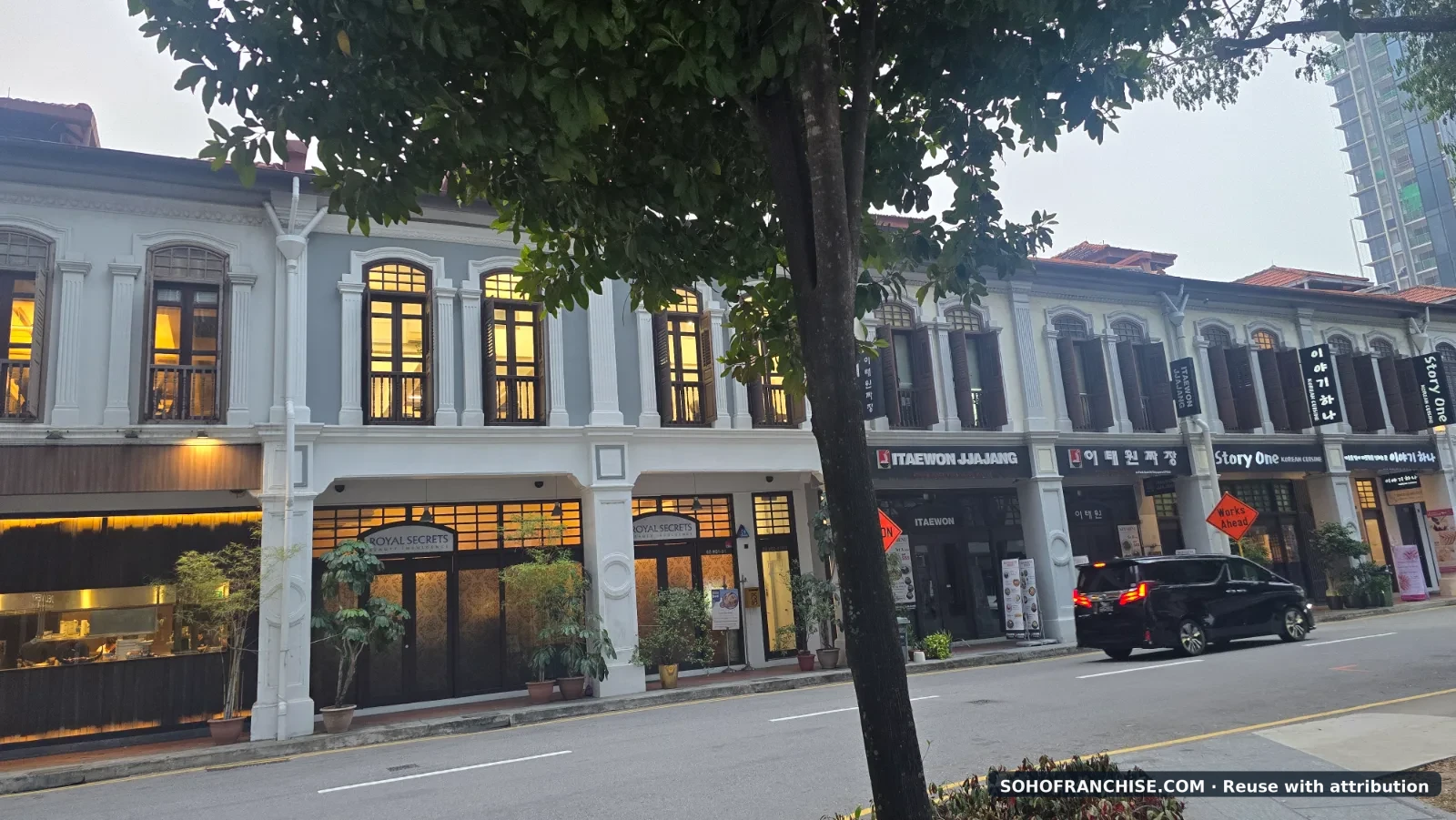
One particularly interesting example is Itaewon Jjajang, a Korean-Chinese restaurant located on Peck Seah Street in Singapore's Tanjong Pagar district.
The restaurant takes its name from Itaewon, one of Seoul's internationally recognized neighborhoods.
Itaewon has long been associated with international dining, cultural diversity and nightlife. Using the name in Singapore connects a familiar Korean neighborhood identity with local customers interested in Korean cuisine.
The restaurant specializes in several dishes that have become everyday favorites in South Korea.
Jjajangmyeon, noodles covered in a rich black bean sauce, is one of Korea's most recognizable comfort foods.
Jjamppong, a spicy noodle soup commonly prepared with seafood and vegetables, offers another familiar Korean-Chinese flavor.
Tangsuyuk, Korean-style sweet-and-sour pork, is frequently enjoyed alongside both noodle dishes.
Although these dishes have historical roots in Chinese cuisine, they evolved into distinctive Korean-Chinese food traditions over generations.
The presence of Itaewon Jjajang in Singapore illustrates how Korean culinary culture can travel beyond traditional Korean barbecue and kimchi.
Local restaurant guides have highlighted the restaurant's menu, and customer reviews demonstrate continued interest in this style of Korean dining.
Restaurant information
Itaewon Jjajang
64 Peck Seah Street, Singapore 079325
Location: Tanjong Pagar
Google Maps: https://www.google.com/maps/search/?api=1&query=Itaewon+Jjajang+64+Peck+Seah+Street+Singapore
2. From K-Dramas to K-Food
The Korean Wave, widely known as Hallyu, initially gained international momentum through entertainment.
Korean television dramas introduced overseas audiences to Korean family life, relationships, cities, landscapes and traditions.
Food frequently appeared as part of those stories.
A bowl of jjajangmyeon, a late-night fried chicken meal or a gathering around Korean barbecue could become a recognizable cultural experience for international viewers.
As audiences became more familiar with these everyday scenes, Korean restaurants offered opportunities to experience the culture beyond the screen.
This progression is particularly significant in Singapore, where a long-established multicultural dining culture provides a receptive environment for international cuisines.
Tanjong Pagar, in particular, has developed a strong concentration of Korean restaurants and other businesses connected with Korean culture.
The area's Korean dining scene demonstrates how entertainment-driven awareness can translate into sustained consumer interest in food and hospitality.
3. Tanjong Pagar: A Singapore Neighborhood With a Korean Connection
Tanjong Pagar combines historic streets, commercial offices, restaurants and nightlife within one of Singapore's central districts.
Its traditional shophouses provide an architectural setting for many independent hospitality businesses.
[INSERT PHOTO 1 HERE — Singapore traditional shophouses and commercial streets]
Photo: Singapore's historic shophouses continue to accommodate restaurants, retail businesses and contemporary dining concepts. © JB Kim / SOHOFRANCHISE.
Originally designed as mixed-use buildings, Singapore's traditional shophouses often placed commercial activity on the ground floor and residential accommodation above.
Many surviving examples have been restored and adapted for modern business use.
The combination of architectural heritage and international dining creates a distinctive urban environment.
For Korean restaurant operators, neighborhoods such as Tanjong Pagar offer a setting in which food, cultural identity and local commercial activity can meet.
For visitors, these streets provide another experience: discovering elements of Korean culture within Singapore's own historical surroundings.
4. Why Singapore Matters to the Korean Wave
Singapore's contribution to the international development of Korean popular culture deserves greater recognition.
Research published by the National University of Singapore identifies the country as an early recipient of Korean television dramas and K-pop.
Singapore's multicultural population and position within Southeast Asian trade and media networks also make it an important market for understanding regional consumer preferences.
For Korean businesses, this creates several advantages.
First, Singapore offers access to consumers familiar with both Asian and Western cultures.
Second, the country's international connectivity provides opportunities for brand visibility beyond its domestic population.
Third, Singapore's sophisticated restaurant and retail sectors can serve as valuable environments for developing and evaluating international business concepts.
While Singapore cannot be described as the sole origin of the Korean Wave, it has played a meaningful role in its regional development and commercial expansion.
5. Korean Food Is Becoming Part of Everyday International Dining
The global expansion of Korean food is no longer limited to large restaurant chains or traditional dining formats.
Independent operators can introduce specialized menus built around a relatively small number of recognizable dishes.
Itaewon Jjajang provides an example of this approach.
Rather than attempting to represent every aspect of Korean cuisine, the restaurant focuses on popular Korean-Chinese comfort foods.
This type of specialization gives international customers a clearer understanding of the restaurant's identity.
It also highlights an important development in K-Food.
The international market is becoming familiar with a much wider range of Korean dishes, extending beyond barbecue, bibimbap and kimchi.
Noodles, street food, traditional desserts, bakery products and specialty beverages can all become part of the broader Korean dining experience.
For entrepreneurs, differentiation increasingly depends on authentic food quality, clear brand positioning and a memorable customer experience.
6. Singapore's Heritage Shophouses and Modern Korean Dining
One of Singapore's distinctive commercial strengths is its ability to accommodate contemporary businesses within preserved architectural environments.
The city-state has conserved thousands of historic shophouses and terrace buildings.
These structures, often characterized by narrow frontages, decorative façades and sheltered pedestrian walkways, remain recognizable elements of Singapore's urban identity.
[INSERT PHOTO 2 HERE — Singapore shophouse architecture or original field photograph]
Photo: Architectural heritage and modern hospitality businesses coexist in Singapore's traditional commercial districts. © JB Kim / SOHOFRANCHISE.
For international restaurant concepts, such locations can offer something different from standardized shopping mall environments.
The surrounding neighborhood becomes part of the dining experience.
This is an approach that visitors to Seoul may also recognize in districts such as Ikseon-dong, Seochon and parts of Jongno.
Older buildings are increasingly being adapted to accommodate contemporary cafés, restaurants and independent shops while preserving elements of their architectural character.
Although the conservation policies and commercial conditions differ between the two countries, Singapore and Seoul offer interesting examples of how heritage and hospitality can coexist.
7. A Cultural Bridge Between Seoul and Singapore
The popularity of Korean culture in Singapore represents more than a commercial opportunity.
It also reflects the growing exchange of everyday experiences between the two countries.
Korean visitors to Singapore can discover familiar foods and names in an international setting.
Singaporean travelers visiting Korea can explore the original neighborhoods, markets and restaurants connected with the culture they have encountered at home.
Itaewon is one example.
A restaurant bearing the Itaewon name in Singapore may encourage curiosity about the actual neighborhood in Seoul.
This relationship between cultural recognition and tourism is increasingly important.
Entertainment introduces destinations, food makes them familiar, and travel allows people to experience them directly.
8. SOHOFRANCHISE Perspective: From Cultural Influence to Local Experience
[INSERT PHOTO 3 HERE — Original Singapore field photograph]
Photo: Singapore's historic commercial streets reflect the meeting of international cultures, architecture and contemporary hospitality. © JB Kim / SOHOFRANCHISE.
For SOHOFRANCHISE, Singapore offers an interesting perspective on the international reach of Korean culture.
The Korean Wave is not simply a success story about music, television or entertainment.
It is also about the growing familiarity of Korean daily life, food, neighborhoods and local experiences.
A restaurant named after Itaewon and serving jjajangmyeon in Singapore is a small but meaningful example of that transformation.
Singapore helped provide an early audience for Korean cultural exports. Today, its restaurants and commercial neighborhoods continue to offer spaces where Korean culture becomes part of everyday international life.
And the relationship works in both directions.
For visitors planning a trip to Korea, the next step may be to discover the actual streets of Itaewon, Jongno, Ikseon-dong and other Seoul neighborhoods behind these familiar cultural references.
The Korean Wave begins with cultural interest. Its lasting value may lie in the connections between people, places, food and everyday experiences.
Sources & Further Reading
SOHOFRANCHISE Editorial | Singapore Field Report | October 13, 2026
SOHOFRANCHISE explores Korea's food, culture, local neighborhoods and international connections through independent editorial reporting.

SOHOFRANCHISE Editorial | October 13, 2026