
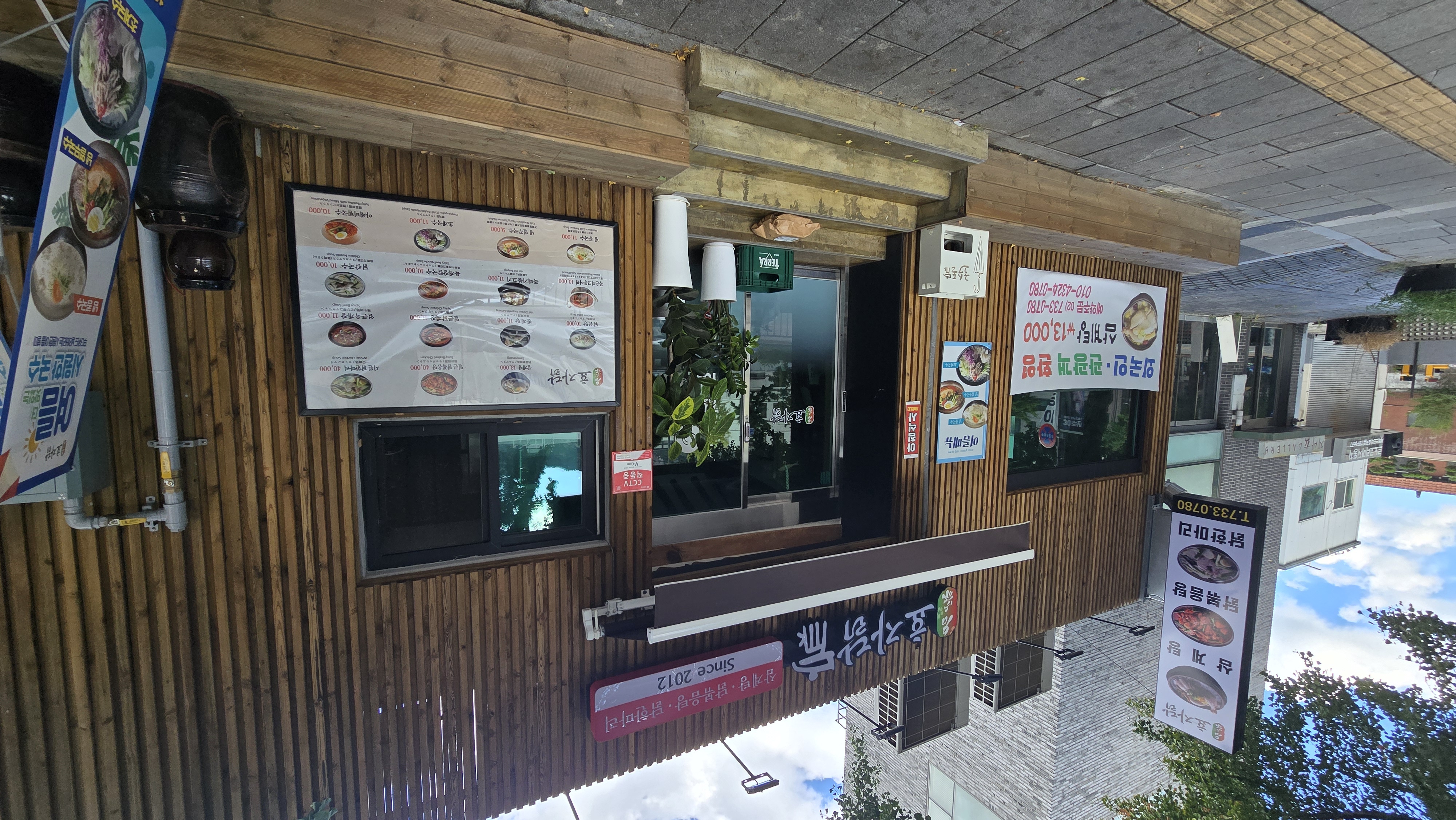
South Korea is approaching an important intersection between two major economic trends: a large and highly developed restaurant franchise market and the retirement of the biggest generation in the country’s history.
For decades, restaurants, cafés and food-service businesses have been among the most familiar ways for Koreans to enter self-employment. As millions of experienced workers leave traditional corporate careers, franchising could become an increasingly important second-career option.
Korea Has More Than 313,000 Franchise Establishments
According to Statistics Korea’s 2024 Franchise Survey, South Korea had approximately 313,880 franchise establishments, an increase of about 4% from the previous year.
Total franchise sales reached approximately KRW 117.8 trillion, while average annual sales per franchise establishment were about KRW 375 million.
Food and beverage businesses represent one of the largest parts of this market. Korean restaurants, cafés, chicken shops, takeaway businesses, bakeries and other food concepts together account for a substantial share of Korea’s franchise economy.
| Food Franchise Category | 2024 Establishments | YoY Growth |
|---|---|---|
| Korean Food Restaurants | 54,409 | +8.3% |
| Coffee & Non-Alcoholic Beverage Shops | 34,735 | +7.7% |
| Chicken Restaurants | 31,397 | +5.3% |
| Light Food & Take-Out Restaurants | 21,991 | +2.6% |
| Pizza, Hamburger & Sandwich Shops | 18,241 | +1.2% |
9.54 Million Second-Generation Baby Boomers
The demographic shift could have an even greater impact on the market.
The Bank of Korea defines Korea’s second baby-boom generation as people born between 1964 and 1974. This group includes approximately 9.54 million people, or around 18.6% of the country’s population.
Members of this generation began reaching Korea’s statutory retirement age of 60 in 2024, meaning the retirement wave will continue for roughly another decade.
The Bank of Korea has also projected that the number of self-employed Koreans aged 60 or older could increase significantly through the early 2030s.
Why Franchising Can Appeal to Retirees
Many members of Korea’s baby-boom generation spent 25 to 35 years working in manufacturing companies, banks, construction firms, trading companies and large corporate organizations.
They often have advantages that younger first-time entrepreneurs may not have: accumulated capital, management experience, professional networks, purchasing discipline and knowledge of accounting and organizational systems.
What many of them do not have, however, is direct restaurant operating experience.
This is where a well-designed franchise system can provide value. A franchise can offer an established menu, purchasing system, employee training, store design, recipes, branding and operating procedures rather than requiring the owner to develop everything from the beginning.
Retirement Capital Requires a Different Strategy
However, retirement should not automatically lead to opening a large restaurant.
Korea’s food-service market is extremely competitive. Rent, labor costs, delivery commissions, utilities and food ingredients can quickly reduce profitability.
This risk is particularly important for retirees because money lost at age 60 or 65 can be much more difficult to recover than investment capital lost at a younger age.
For this reason, the most suitable post-retirement franchise may not be the largest or most expensive restaurant.
Smaller, Simpler and More Automated
SOHOFRANCHISE expects future opportunities to increasingly favor concepts combining good food with operational simplicity.
Potential formats include compact Korean restaurants, specialty food stores, takeaway concepts, small cafés, bakery stores, delivery-oriented kitchens and restaurants using kiosks, automated ordering and centralized food preparation.
A store that can operate efficiently with two or three people may ultimately be more attractive to a retired owner than a large restaurant requiring ten employees.
Technology will also play a growing role. Self-ordering kiosks, automated payment systems, digital inventory management and centralized preparation can reduce labor dependency and make stores easier to manage.
Location Still Determines Success
Even the strongest franchise brand cannot completely overcome a poor location.
Residential neighborhoods, office districts, university areas and tourist destinations all require different menus, pricing and operating models.
A neighborhood Korean restaurant serving repeat local customers has a very different business model from a restaurant depending mainly on tourists or weekend visitors.
SOHOFRANCHISE Outlook
Korea’s retirement wave could become one of the most important forces shaping the country’s franchise industry over the next decade.
Millions of experienced people will leave conventional employment, but many will continue to seek income, social activity and a meaningful second career.
Franchising can provide a bridge between retirement and entrepreneurship.
However, the future is unlikely to belong simply to franchise brands opening the largest number of stores.
The strongest franchise systems will be those capable of protecting the franchisee’s capital while simplifying daily operations.
That means reasonable initial investment, manageable rent, fewer employees, transparent purchasing, repeat customers, strong training and a business model that an owner in his or her 60s can realistically operate for many years.
South Korea’s restaurant franchise market is already enormous. The retirement of 9.54 million second-generation baby boomers could make it even larger while encouraging the industry to develop a new generation of smaller, safer and more sustainable franchise models.
Sources: Statistics Korea 2024 Franchise Survey; Bank of Korea analysis of Korea’s second baby-boom generation.