
Can Seoul Become the Next London?
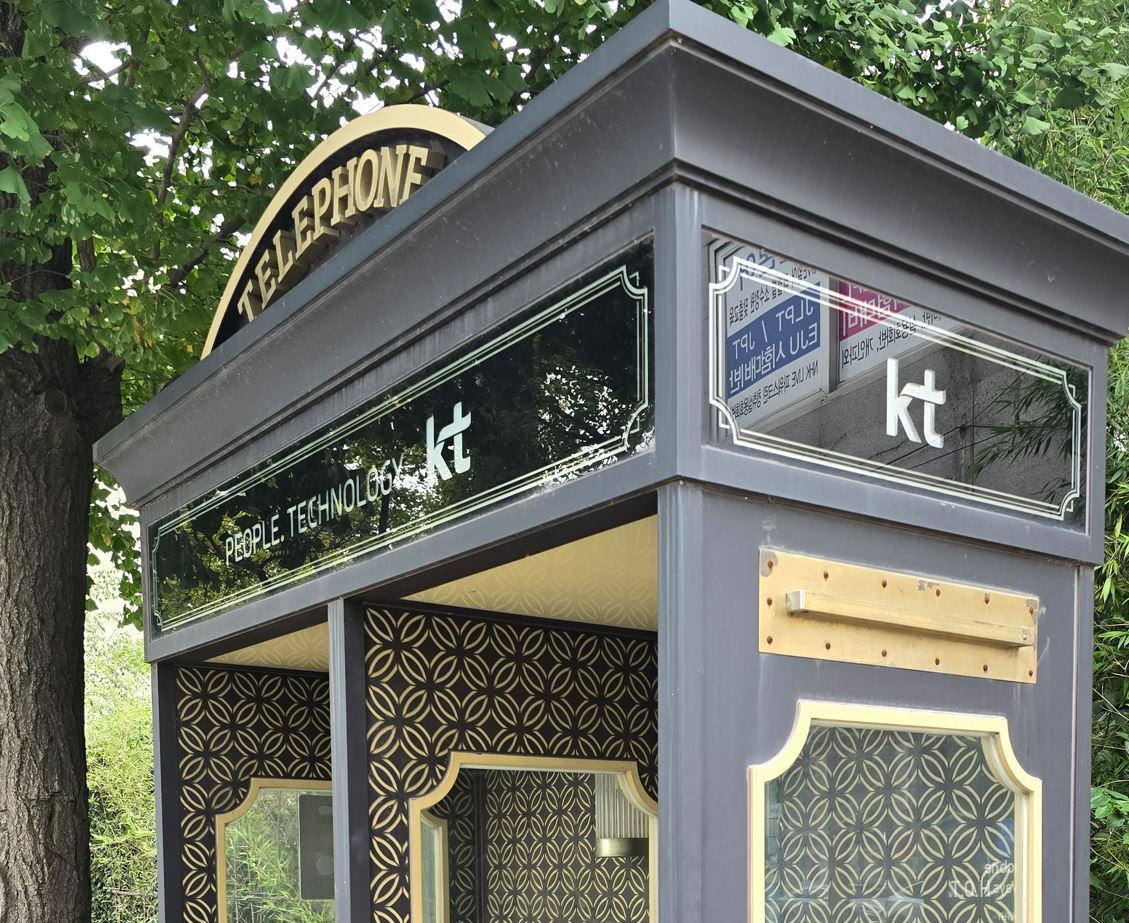
Near Gyeongbokgung Station in central Seoul stands a distinctive black-and-gold telephone booth. Surrounded by trees and located close to one of Korea’s most visited royal palaces, it may appear to be a small piece of street furniture. However, it also offers a glimpse of Seoul’s emerging potential as one of the world’s great tourism cities.
London’s red telephone boxes were originally installed for practical communication. Over time, however, they became internationally recognized symbols of the city. Tourists now photograph them alongside Big Ben, Tower Bridge, Buckingham Palace and London’s double-decker buses.
The telephone booth near Gyeongbokgung Station could play a similar role on a smaller, distinctly Korean scale. Its dark exterior, gold decoration and traditional geometric patterns create a visual connection between modern communication infrastructure and Seoul’s historic identity.
It is not simply a telephone booth. It is a potential urban tourism asset.
The telephone booth near Gyeongbokgung Station, photographed in Seoul on August 20, 2026. Photo: JB Kim.
Seoul Is Becoming a Global Cultural Destination
London built its tourism reputation over generations through royal heritage, museums, literature, music, fashion and recognizable urban symbols. Seoul is now developing its own combination of attractions at extraordinary speed.
The city brings together:
The royal palaces of Gyeongbokgung, Changdeokgung and Deoksugung
Traditional neighborhoods such as Bukchon, Seochon and Samcheong-dong
K-pop, Korean films, television dramas and digital entertainment
Korean food, cafés, fashion, skincare and cosmetics
Advanced transportation and digital infrastructure
A safe and convenient environment for independent travelers
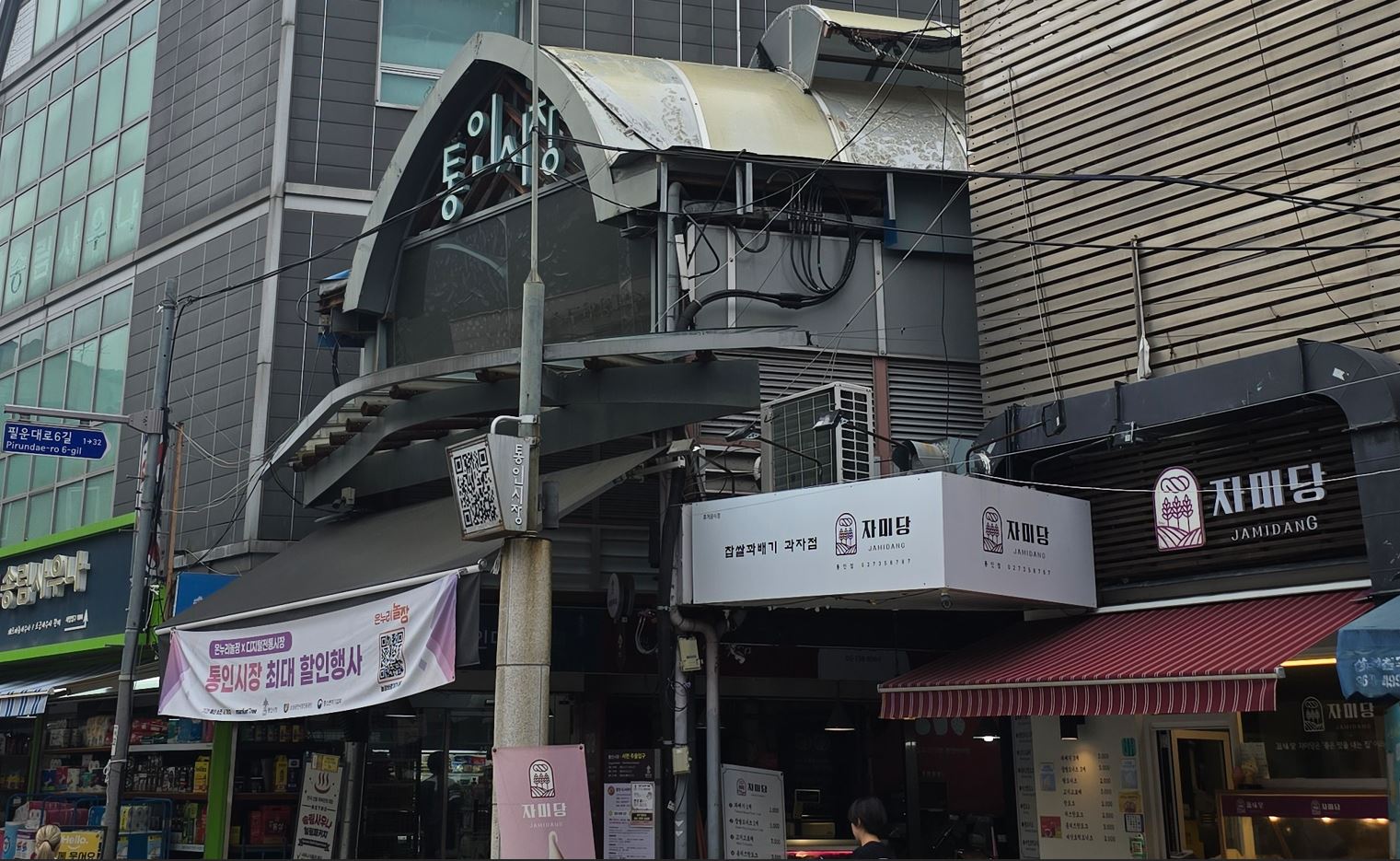
Gyeongbokgung Station is particularly important because it connects visitors directly with Gyeongbokgung Palace, Seochon, Tongin Market, the Blue House area, Bukchon and Samcheong-dong. These neighborhoods allow tourists to experience history, food, shopping, photography and daily Seoul life within a relatively compact area.
Official data already show strong momentum. According to the Seoul Metropolitan Government, Seoul welcomed a record 8.23 million international tourists during the first half of 2026, an increase of 21.3 percent from the previous year. Overseas card spending reached KRW 5.617 trillion, rising 56.8 percent.
The spending increase was considerably faster than the growth in visitor numbers. This suggests that Seoul tourism is moving beyond simple numerical recovery and toward longer stays, broader experiences and higher-value consumption.
The Tenfold Tourism Scenario
SOHOFRANCHISE believes Seoul may be at the beginning—not the end—of its international tourism expansion.
Our high-growth scenario anticipates that international visitor activity in Seoul’s principal tourism districts could expand by as much as ten times over the next decade. This is an independent market outlook rather than an official government forecast.
A literal tenfold increase in unique annual international arrivals would be an extremely ambitious target. Achieving anything close to that level would require substantial expansion of airport capacity, accommodation, multilingual services, transportation and neighborhood-level tourism infrastructure.
However, the broader economic opportunity can grow much faster than arrival numbers alone. More repeat visits, longer stays, medical tourism, cultural events and spending across additional neighborhoods could multiply Seoul’s total tourism economy.
Seoul’s opportunity is supported by several structural forces:
Global interest in Korean culture is still expanding.
Social media continuously introduces Seoul’s streets, food and lifestyles to new audiences.
Independent travelers are exploring neighborhoods beyond conventional tour routes.
Korean beauty, healthcare, fashion and food give visitors several reasons to return.
Seoul combines historic heritage with one of the world’s most technologically advanced urban environments.
London demonstrates how ordinary urban elements can become permanent parts of a city’s international image. Seoul should likewise preserve and promote distinctive objects, alleys, shopfronts, hanok buildings, signs and neighborhood stories.
Opportunities for Small Businesses and Franchises
A major increase in tourism would create opportunities far beyond airlines and large hotels. Much of the benefit could flow directly into neighborhood businesses.
Accommodation
Demand should increase for boutique hotels, guesthouses, hanok stays, serviced residences and professionally managed short-term accommodation. Visitors increasingly look for places that provide a local experience rather than standardized rooms alone.
Properties around Gyeongbokgung, Seochon, Bukchon and Samcheong-dong may become especially valuable because they offer walking access to historic sites, restaurants, galleries and traditional streets.
Restaurants and Cafés
Korean food has become a primary reason to visit Seoul. The next generation of successful businesses will include traditional restaurants, contemporary Korean dining, dessert cafés, bakeries, tea houses and late-night food concepts.
Multilingual menus, simple reservation systems and clear explanations of ingredients will become increasingly important.
Souvenir and Lifestyle Stores
Tourists are moving beyond inexpensive, generic souvenirs. They want locally designed products with a story: palace-inspired stationery, handmade crafts, photography, ceramics, fashion accessories and objects connected to individual Seoul neighborhoods.
A modest shop near a historic attraction can become a global micro-brand when its products are easy to photograph, share and purchase online after the visitor returns home.
Beauty and Cosmetics
K-beauty gives Seoul an advantage that London and many other tourism capitals cannot easily reproduce. Cosmetics stores, skincare consultation, personal color analysis, makeup experiences and beauty-related medical services can turn shopping into a memorable tourism activity.
Unmanned and Small-Footprint Retail
Tourism growth also creates opportunities for compact and partially unmanned businesses. Self-service photo studios, souvenir kiosks, luggage storage, automated currency services, vending retail and late-night convenience concepts can serve international visitors without requiring large premises.
The strongest concepts will combine automation with human support when visitors need advice, translation or problem resolution.
From Street Infrastructure to Tourism Symbol
The Gyeongbokgung telephone booth shows that successful tourism is not created only through large construction projects. A city also needs small, memorable details.
London protected and reused many of its telephone boxes even after mobile phones reduced their original function. Some became miniature libraries, information points, cafés or public art installations while retaining their familiar appearance.
Seoul could adopt a similar approach. Historic-style telephone booths might be reused as:
Multilingual tourist information points
Small cultural exhibition spaces
Photo locations with neighborhood-specific designs
Emergency communication facilities
Digital maps and local business guides
Compact souvenir or postcard kiosks
Each booth could reflect the identity of its location. A booth near Gyeongbokgung might use royal palace patterns, while those in Bukchon, Seochon, Deoksugung or Dongdaemun could carry different local designs.
Seoul’s Next Decade
London’s tourism identity was not created by one landmark. It emerged from the combination of history, architecture, transportation, shops, public symbols and accumulated stories.
Seoul now possesses the same essential ingredients. Its palaces provide historical depth, while K-culture, food, beauty and technology provide global relevance. The next challenge is to transform this popularity into a sustainable citywide tourism economy.
This will require thoughtful preservation, better pedestrian routes, multilingual services, diverse accommodation and policies that allow local residents and small businesses to participate in the growth.
The telephone booth near Gyeongbokgung Station may be a modest object, but it represents a much larger possibility. Seoul is developing its own visual language and its own collection of globally recognizable places.
If the city protects its character while preparing for international growth, Seoul could become to the coming generation what London has been to generations before it: a city that millions dream of visiting—and returning to.
For entrepreneurs, property owners and franchise operators, the message is clear. The most important opportunities may arise not only in Gangnam or Myeong-dong, but also along the historic streets connecting Gyeongbokgung, Seochon, Bukchon and Samcheong-dong.
The next decade of Seoul tourism may already be beginning at street level.
Editorial note: The tenfold growth scenario presented in this article is SOHOFRANCHISE’s independent long-term market outlook. It is not an official tourism forecast or investment guarantee.
Sources: Seoul Metropolitan Government tourism statistics; VisitBritain inbound tourism research.