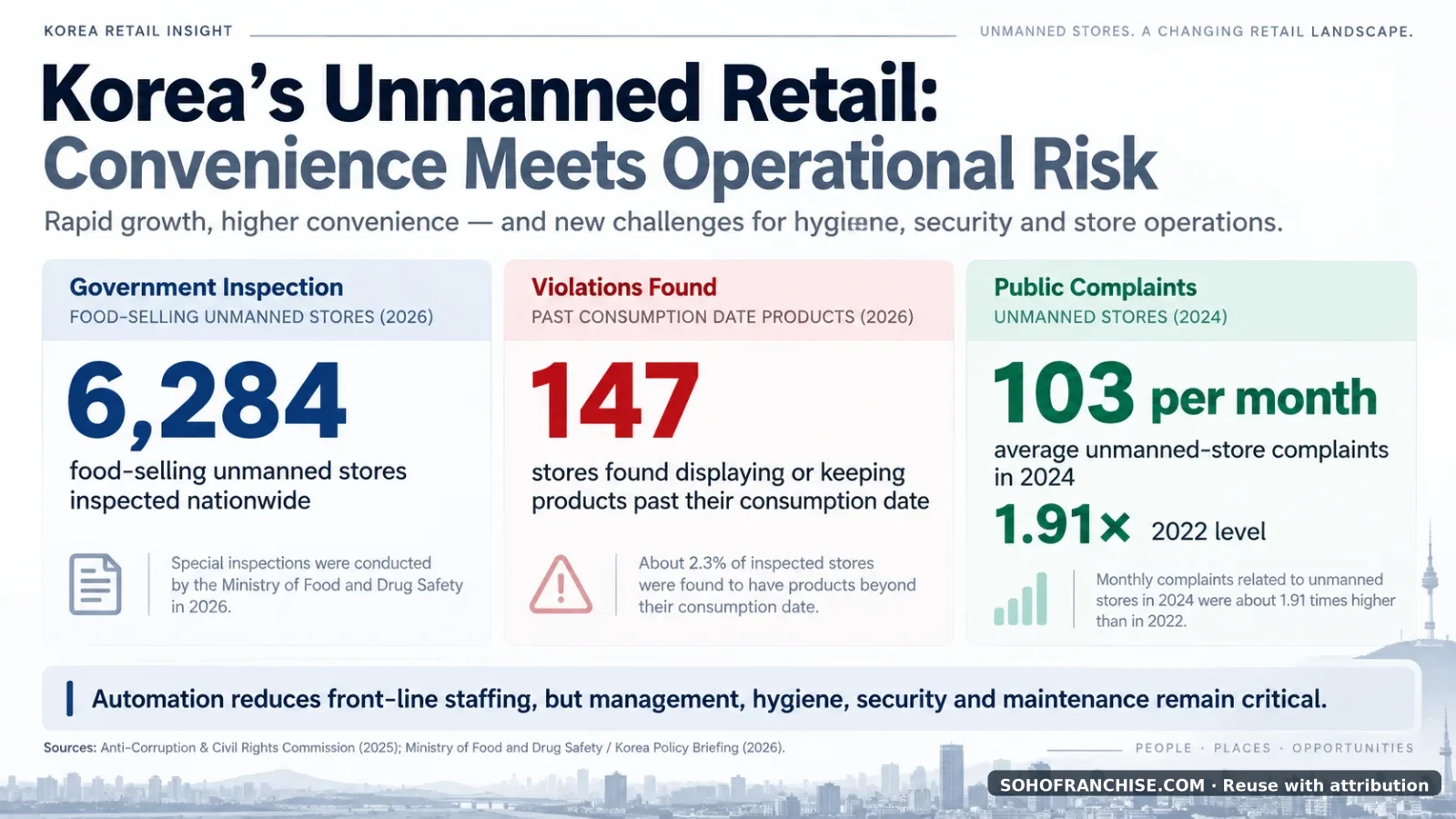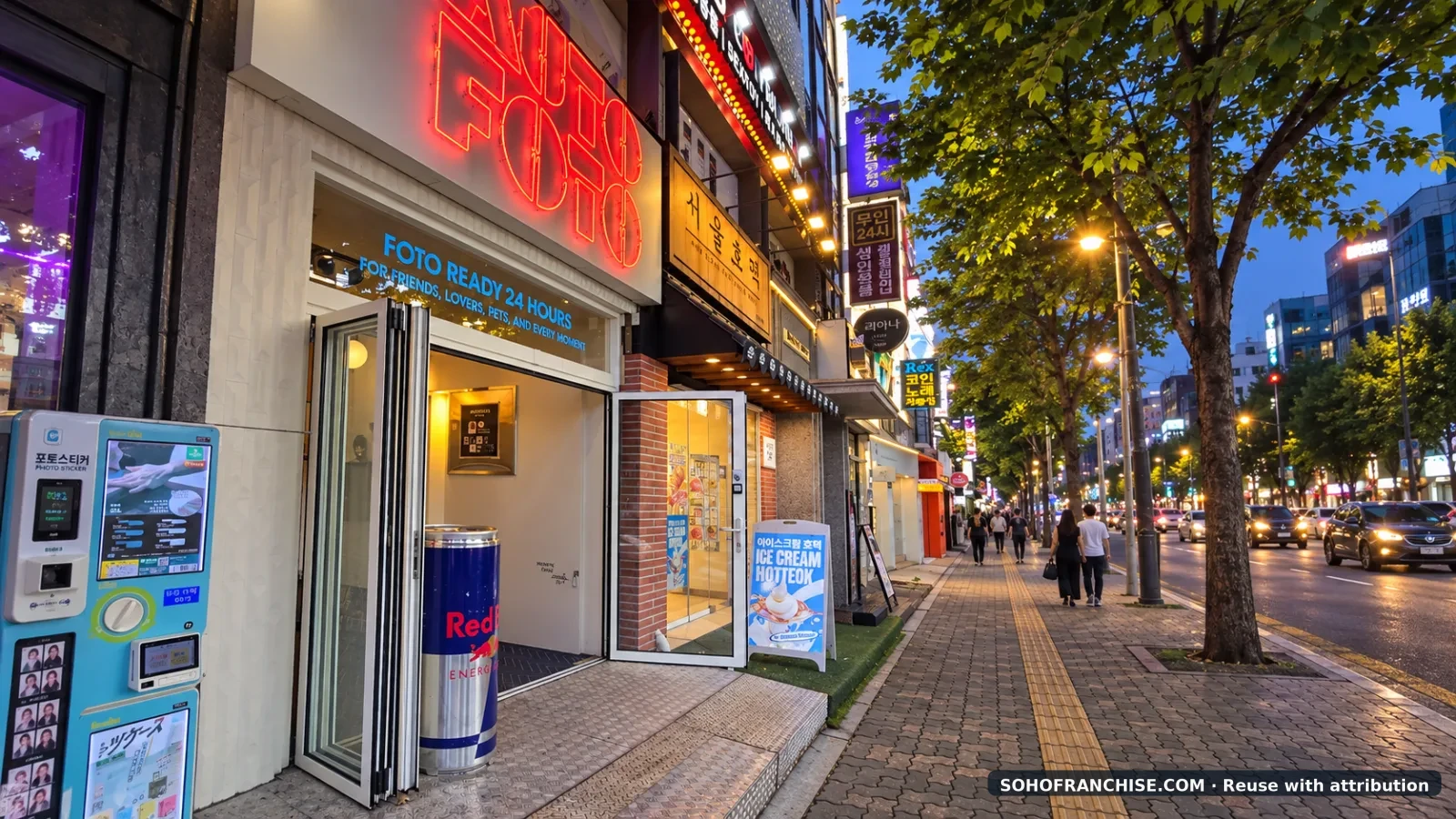
On many commercial streets in Korea, unmanned retail is no longer a novelty. It has become part of the urban landscape. Self-photo studios, ice cream shops, snack stores, laundromats, claw-machine arcades, and compact kiosks now operate with minimal or no on-site staff, often open 24 hours a day.
The appeal is obvious: lower dependence on on-site labor, longer opening hours, and a business model that appears relatively simple to replicate.
But the unmanned retail story is changing.
The first wave of interest was driven by a straightforward promise — reduced labor costs. The second wave, now becoming clearer, is about something more difficult: operational discipline.
The businesses that survive will not necessarily be the ones that remove the most employees from the store. They will be the ones that build the best systems around the store.
Unmanned does not mean unmanaged.
A storefront trend that reflects a broader shift
A walk through a busy Korean commercial district makes the change easy to see. Self-photo studios, game arcades, vending concepts and specialty shops increasingly combine automated payment, digital interfaces and long operating hours with highly visible storefront branding.
Many of these businesses are designed around a simple customer journey. A customer enters, selects a service or product, makes a digital payment and completes the experience without requiring an employee at the counter.
This simplicity is one of the strongest characteristics of successful unmanned retail.
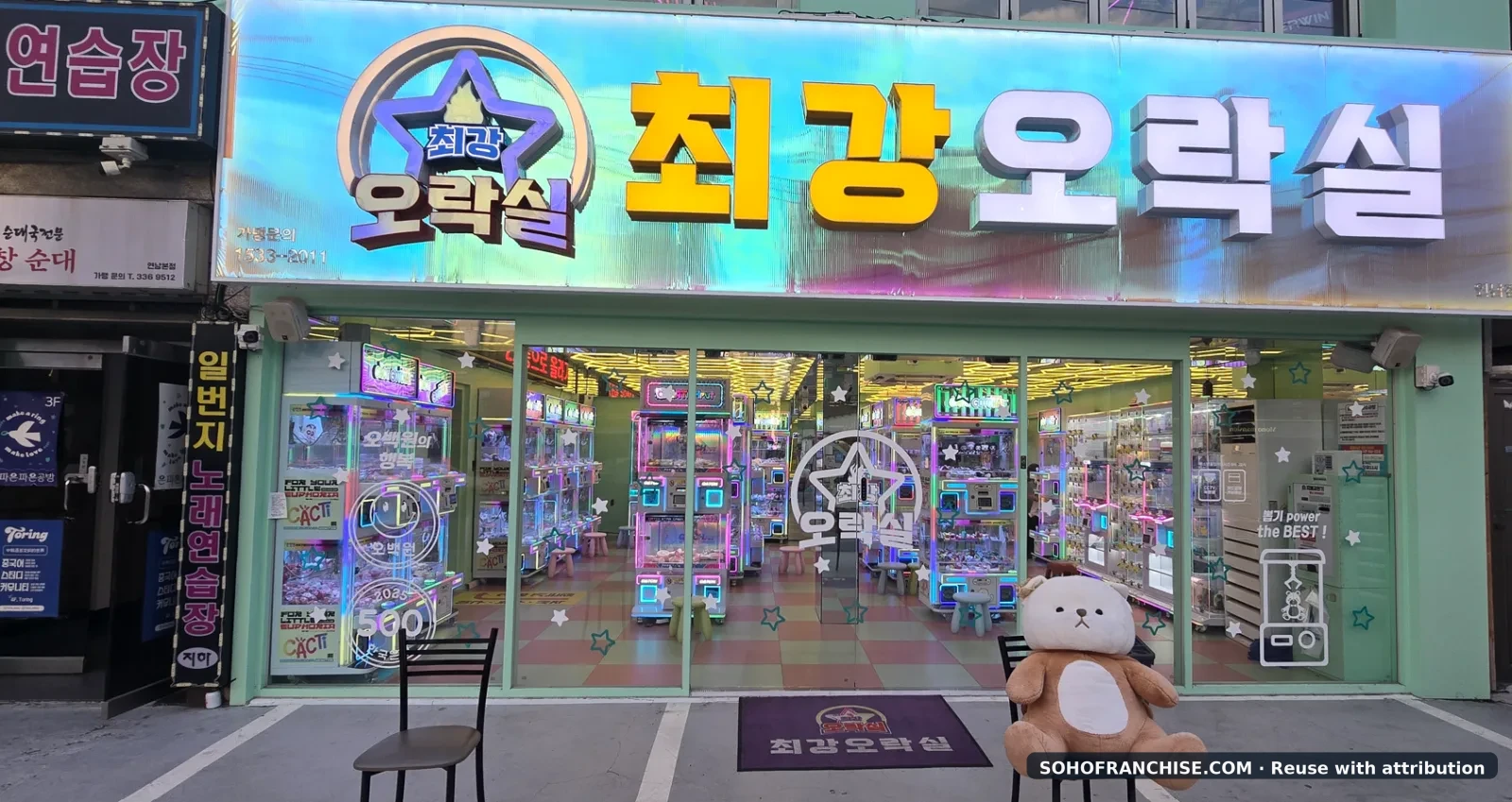
Entertainment-oriented stores are especially interesting because the product is not necessarily something placed on a shelf. Instead, the customer is purchasing access to a machine, game, photo experience or other automated service.
That changes the economics of the store. There may be less traditional inventory handling, but equipment reliability, maintenance, security and customer support become more important.
The store may appear unmanned from the street, but the operation behind it certainly is not.
The myth of easy passive income
One reason unmanned franchises attracted so much attention is that they were often associated with the idea of semi-passive income. For small business owners, that message was powerful.
If labor is one of the heaviest costs in traditional retail, removing an employee from the counter can appear to offer a direct route to higher margins.
Reality is more complex.
A store without staff simply shifts many forms of labor somewhere else. Cleaning, restocking, equipment maintenance, customer complaints, payment errors, security checks and performance monitoring still have to be handled.
In some businesses, automation genuinely reduces the total amount of labor required. In others, the work does not disappear — it simply moves from the shop floor to the back office, smartphone or remote operating center.
This is where operators discover the difference between opening an unmanned store and operating one successfully.
A newly opened shop with colorful machines, a kiosk and CCTV can look highly efficient. But long-term profitability depends on whether the owner can maintain cleanliness, minimize losses, resolve equipment failures quickly and deliver a consistent customer experience without permanent on-site staff.
Which categories work best?
Not every business is equally suitable for unmanned operation.
Some formats naturally fit self-service better than others. Self-photo booths, laundromats, vending concepts and machine-based entertainment stores have relatively short and repeatable customer journeys.
Customers generally understand what they are expected to do, and digital interfaces can guide most of the transaction.

Claw-machine arcades are a particularly visible example. Machines perform the transaction and entertainment function, while the operator focuses on location, machine availability, prize selection, replenishment, security and maintenance.
The colorful exterior is also part of the business model. In an unmanned environment, the storefront itself must do more of the work traditionally performed by employees: attracting attention, explaining the concept and giving customers confidence to enter.
By contrast, businesses involving fresh food, complex preparation or high hygiene sensitivity face greater operational challenges. The more variables a business contains, the harder it becomes to manage remotely.
What looks attractive in a franchise brochure may therefore become maintenance-heavy or supervision-heavy in daily operation.
The question for the next generation of unmanned franchises is no longer simply:
“Can this store operate without staff?”
A better question is:
“Can this business be operated reliably at scale with limited on-site staffing?”
The storefront itself becomes part of the operating system
Unmanned stores also place greater importance on physical design.
In a conventional shop, an employee can greet customers, explain the service and solve uncertainty. In an unmanned store, much of that communication has to be built into the environment.
Lighting, signage, transparent storefronts, payment instructions, machine layout and visual branding all become part of the operating system.
This helps explain why many Korean self-service concepts use unusually strong colors, large signs and highly visible interiors. The store must communicate immediately what it is and how it works.
For franchise developers, this creates an important distinction. Store design is no longer only about aesthetics. It becomes part of customer guidance, operational efficiency and even security.
The real winners may be system operators
The most important evolution in unmanned retail may ultimately take place behind the storefront.
The strongest operators are learning that their real asset is not simply the brand name or interior design. It is the operating system behind the network.
Remote CCTV access, digital payment data, machine alerts, inventory monitoring, online customer service, maintenance schedules and standardized replenishment procedures can all be managed as part of a centralized operating structure.
This is where unmanned franchising becomes more sophisticated.
Future franchise companies may increasingly resemble remote retail management platforms. They will still provide a brand and store concept, but a growing part of their value will come from helping franchisees operate multiple locations consistently.
For prospective franchisees, this means evaluating much more than startup cost, interior design or social-media popularity.
- How is the store monitored remotely?
- How quickly are equipment failures detected?
- Who responds when a customer has a payment problem?
- How frequently must the owner physically visit the store?
- How are theft, damage and misuse controlled?
- How are machines and consumables maintained?
- Can one operator realistically manage several locations?
These questions may ultimately matter more than the number of employees standing behind a counter.
From labor-saving to management innovation
Korea’s unmanned retail market appears to be moving into a more mature phase.
The early proposition was simple: remove labor and reduce operating costs. The next stage is more demanding. Operators must combine automation with process design, maintenance standards, remote supervision and strong customer experience.
The first generation of unmanned stores demonstrated that customers are willing to serve themselves.
The next generation has to demonstrate something more important: sustainable operating economics.
This distinction is particularly important in franchising. A franchise does not become successful simply because the same store can be opened repeatedly. It succeeds when the operating model itself can be reproduced reliably.
Opening ten identical shops is relatively easy. Making all ten profitable, clean, functional and manageable is much harder.
Seen from this perspective, unmanned retail is not really about the disappearance of work.
It is about the redesign of work.
Human activity moves away from the checkout counter and toward monitoring, maintenance, logistics, technology and centralized management.
The most successful unmanned franchises of the next decade may therefore not be the businesses with the fewest people.
They may be the businesses that understand exactly where people are still necessary, where technology performs better, and how the two can be combined into a scalable operating system.
That is why Korea’s unmanned retail scene is becoming more than a collection of unusual storefronts.
It is becoming a useful real-world laboratory for the future of small-format franchising.